🚨 Israel Vows Elimination of Iran Ayatollah Khamenei in Future War
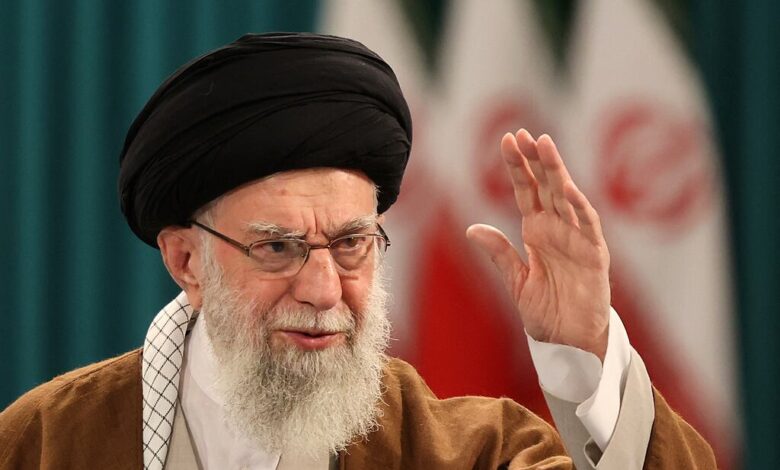
Former Israeli Defense Minister Yoav Gallant declares that Supreme Leader Ayatollah Khamenei must be eliminated in any future war with Iran. His remarks follow Israel’s June strikes on Tehran’s military infrastructure.
Israel’s Former Defense Minister Yoav Gallant Issues Warning
Israel’s former defense minister, Yoav Gallant, has declared that Ayatollah Ali Khamenei, Iran’s Supreme Leader, must be directly targeted in any future confrontation between Israel and Iran. His statement, published by The Jerusalem Post on August 31, 2025, reflects Israel’s increasing belief that Khamenei represents the core of Iran’s long-term threat.
Gallant made the remarks during an interview on Channel 12’s Meet the Press on Saturday, August 30. He emphasized that while Israel inflicted major military damage on Iran during their recent 12-day conflict, the “root of the problem” remains untouched.
“Although Khamenei was not eliminated in this round, his elimination must be part of any plan of the State of Israel if a campaign against us is launched,” Gallant said.
Israel-Iran Conflict: The June War and Its Aftermath
The June 2025 conflict between Israel and Iran erupted after weeks of escalating hostilities. Israel launched a massive aerial offensive, striking nuclear facilities, ballistic missile sites, intelligence hubs, and military infrastructure deep inside Iran.
According to the Israeli Defense Forces (IDF), the strikes destroyed key nuclear enrichment centers and severely degraded Iran’s missile capabilities. Several senior Iranian commanders, nuclear scientists, and intelligence operatives were reportedly killed.
Although Tehran retaliated with missile and drone barrages that caused dozens of Israeli casualties, analysts believe Israel retained the upper hand. The fighting ended on June 24 under a negotiated truce, but tensions remain dangerously high.
Gallant: Iran Will Rebuild but Cannot Recover Strategic Threat
Gallant warned that Iran is already attempting to restore some of its damaged capabilities, particularly its ballistic missile program. However, he argued that Israel must ensure Tehran never regains the ability to threaten Israel on a strategic level.
“Iran will rebuild, but the key is to ensure they do not recover the strategic capacity to threaten us,” Gallant said.
Israel’s Intelligence Advantage
One of the most striking revelations from Gallant’s interview was Israel’s intelligence edge. He noted that Iranian officials remain baffled about how Israel was able to penetrate their heavily guarded security systems.
“The main thing that is not talked about is that the Iranians do not understand how we penetrated them in terms of intelligence, and they do not know what we know,” Gallant stressed.
Western intelligence sources have long suggested that Israel’s success was built on years of electronic surveillance, infiltration of security details, and cyber operations targeting Iran’s defense networks.
Global Reactions: Netanyahu, Trump, and the U.S. Position
During the height of the June conflict, Israeli Prime Minister Benjamin Netanyahu openly discussed the possibility of eliminating Khamenei. The idea was reportedly shared with U.S. officials, including former President Donald Trump.
Trump even hinted at supporting regime change in Iran. Writing on Truth Social in late June, he stated:
“It’s not politically correct to use the term ‘Regime Change,’ but if the current Iranian Regime is unable to MAKE IRAN GREAT AGAIN, why wouldn’t there be a Regime change??? MIGA!!!”
The remark sparked debate across Washington, with some viewing it as an endorsement of Israel’s more aggressive stance.
Khamenei’s Response: Defiance and Resilience
After disappearing from public view for nearly three weeks following Israel’s airstrikes, Ayatollah Ali Khamenei resurfaced in late July. Speaking defiantly, he accused Israel of miscalculating Iran’s unity and determination.
“Our enemies believed attacks would separate the people from the state, but they were wrong,” Khamenei declared. He further described Israel as “the most despised government in the world.”
What This Means for the Middle East
Gallant’s comments underline the growing volatility in the Middle East. Analysts argue that Israel’s insistence on directly targeting Iran’s supreme leader marks an escalation in rhetoric and strategy.
For Iran, the strikes demonstrated how vulnerable its top leadership and infrastructure remain despite years of security measures. For Israel, the war reinforced the belief that eliminating Khamenei himself may be the only way to dismantle Tehran’s influence across the region.
The international community, meanwhile, remains divided. Western allies fear a renewed confrontation could spiral into a wider regional war involving Lebanon’s Hezbollah, Yemen’s Houthis, and Iraq’s militias, all backed by Iran.
Conclusion
Gallant’s declaration signals that Israel is preparing for the next phase of its conflict with Iran. The insistence on targeting Ayatollah Khamenei directly reflects the view in Jerusalem that military strikes alone are not enough.
As both nations rebuild and reposition, the Middle East stands on the edge of another potentially explosive chapter. Whether diplomacy or confrontation prevails remains uncertain.