Infrastructure Financing in Nigeria: Lagos Example Sparks Nationwide Shift Toward Capital Market Funding
By DAYO ADESULU
Lagos Model Reshapes Conversation on Infrastructure Financing
A fresh momentum is building around infrastructure financing in Nigeria, as state governments face mounting pressure to rethink how they fund critical projects. At the heart of this shift is Lagos State’s growing reliance on capital market instruments—a model now drawing attention across the country.
Industry stakeholders, led by the Association of Securities Dealing Houses of Nigeria (ASHON), are urging governments to embrace structured financing frameworks that tap into investor funds rather than depend heavily on traditional allocations.
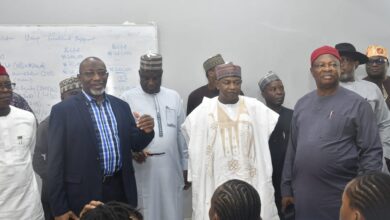
This renewed push gained visibility during the induction of Babajide Olusola Sanwo-Olu into the Chartered Institute of Stockbrokers (CIS), where financial experts framed Lagos as a practical case study in modern infrastructure funding.
Infrastructure Financing in Nigeria Faces Fiscal Reality Check
Across Nigeria, infrastructure financing challenges continue to deepen. Limited revenues, rising debt obligations, and competing public needs have constrained government spending. As a result, experts argue that relying solely on budgetary allocations is no longer sustainable.
This reality has forced a shift toward capital market solutions—an area where Lagos has taken a clear lead. By issuing bonds and engaging investors directly, the state has created an alternative funding pipeline that reduces dependence on federal transfers.
According to ASHON Chairman Sehinde Adenagbe, this approach represents a turning point for infrastructure financing in Nigeria. He noted that consistent engagement between governments and market operators could unlock billions in long-term funding.
Investor Confidence Drives Oversubscription Success
Lagos State’s recent bond issuances highlight the growing confidence investors place in well-structured government offerings. In 2025, the state raised N14.815 billion through a Series 3 Green Bond and N230 billion via a Series 4 Bond—both of which recorded oversubscription.
These outcomes reflect more than strong demand; they signal trust in governance, project delivery, and financial discipline. For analysts, this is the core lesson for infrastructure financing in Nigeria: credibility attracts capital.
Moreover, the Lagos experience suggests that when governments maintain transparency and clear repayment structures, investors are more willing to commit long-term funds.
Capital Market Institutions Take Centre Stage
.As the conversation evolves, regulatory bodies and market institutions are becoming increasingly central to Nigeria’s development strategy. Agencies like the Securities and Exchange Commission Nigeria and the NGX Group Plc are expected to play stronger roles in ensuring compliance, protecting investors, and expanding participation.
ASHON emphasised that deeper collaboration among these institutions will strengthen the entire ecosystem. When regulators, exchanges, and operators align effectively, the market becomes more attractive to both local and foreign investors.
This alignment, stakeholders say, is critical to scaling infrastructure financing in Nigeria beyond a few leading states.
States Under Pressure to Replicate Lagos Strategy
With Lagos setting the benchmark, attention is now shifting to other states. Many face urgent infrastructure needs but lack sustainable funding models. The success of Lagos has raised a pressing question: can other states replicate this approach?
Analysts believe replication is possible—but not automatic. It requires disciplined fiscal management, transparent governance, and consistent engagement with market stakeholders. Without these elements, bond issuances may struggle to gain investor trust.
Adenagbe stressed that governments must adopt accountability as a core principle. He argued that infrastructure financing in Nigeria will only succeed if states build reputations that inspire investor confidence over time.
Recognition of Sanwo-Olu Signals Policy Direction
The recognition of Governor Sanwo-Olu by CIS goes beyond ceremonial value. It reflects growing alignment between public policy and capital market development. Observers say this signals a broader policy direction where governments actively integrate financial market strategies into development planning.
For Lagos, the approach has already yielded tangible results. For Nigeria as a whole, it presents a roadmap—one that could transform how infrastructure projects are funded and delivered.
A Defining Moment for Infrastructure Financing in Nigeria
Nigeria now stands at a critical juncture. The demand for infrastructure continues to rise, yet traditional funding sources remain limited. In this context, capital markets offer a viable path forward—but only if governments commit to reforms.
The Lagos model has shown what is possible. However, scaling that success nationwide will require coordination, discipline, and trust between the public and private sectors.
As stakeholders continue to push for deeper collaboration, the future of infrastructure financing in Nigeria may depend on how quickly governments adapt to this evolving financial landscape.
#InfrastructureFinancing #NigeriaEconomy #CapitalMarket #LagosModel #SanwoOlu #ASHON #EconomicReform #PublicPrivatePartnership