

Africa’s Cheap Petroleum Trap: Dangote Warns of Toxic Fuel Imports
By DAYO ADESULU
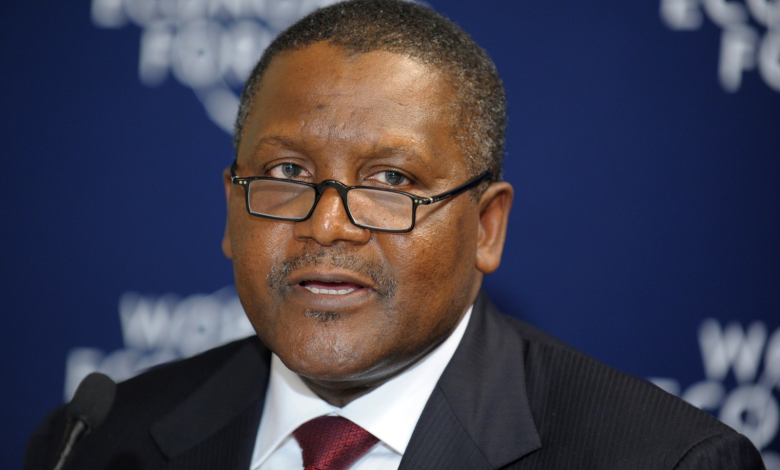
At the West African Refined Fuel Conference in Abuja, Aliko Dangote condemned Africa’s cheap petroleum importation, adding that it’s unhealthy to the continent. He highlighted the continent’s refining inefficiency and urged boosting domestic refining capacity to avoid handing over a $90 billion market to foreign traders.
Dangote Highlights Africa’s Cheap Petroleum Imports Crisis
During the West African Refined Fuel Conference in Abuja, Aliko Dangote sounded the alarm on Africa’s cheap petroleum imports. He revealed that much of the refined fuel entering African markets is of substandard or toxic quality—often blended to levels that would not pass regulatory standards in Europe or North America.
Dangote spoke before regulators, industry experts, and S&P Global Commodity Insights. He warned that Africa’s limited refining capacity forces reliance on imports exceeding 120 million tonnes annually—equivalent to a staggering $90 billion market transferred overseas each year.
- Dangote Refinery Has Enough Petrol to Meet Nigeria’s Needs, Says Aliko Dangote
- https://www.thecheernews.com/for-growth-and-development-dangote-urges-wealthy-nigerians-to-invest-in-nigeria/
How Import Dependency Undermines Africa’s Economic Base
Despite producing roughly 7 million barrels of crude daily, Africa refines only about 40% of its 4.3 million barrels-per-day fuel consumption. In contrast, regions like Europe and Asia domestically refine over 95% of their consumption. Dangote explained:
“We export crude only to re-import refined fuel. We export jobs and import poverty. We are handing economic potential to others.”
He said African countries, even those with GDP exceeding $90 billion, lose value through this crude‑for‑fuel exchange—sustaining foreign refining ecosystems at Africa’s expense.
Why High-Quality Refining Must Be Prioritized
Dangote stressed that boosting Africa’s refining capacity is urgent and essential. He insisted on trade grounded in economic efficiency and quality standards—not survival of sub‑par fuel imports. Weak regulatory frameworks and cheap, often toxic blends destabilize markets and damage consumer trust.
Building the World’s Largest Refinery Was No Small Feat
Constructing the Dangote Petroleum Refinery involved overcoming enormous technical and logistical hurdles. Dangote cited:
- Clearing 2,735 hectares—70% swamp requiring 65 million m³ of sand fill
- Installing 250,000 foundation piles and miles of piping and electrical cabling
- Mobilizing over 67,000 workers, including 50,000 Nigerians, across hundreds of disciplines
- Enduring a two‑year COVID-19 delay
To support the facility, the team built a dedicated seaport, imported 2,500 heavy equipment units, erected 330 cranes, and opened the world’s largest granite quarry with a 10 million‑tonne annual output.
“We didn’t just build a refinery—we built a full industrial ecosystem.”
Economic & Logistics Pressures Still Weigh Heavily
Despite success, substantial barriers remain:
- At launch, the naira‑to‑dollar rate was ₦156/USD; by completion, it had hit ₦1,600/USD
- Refineries faced difficulty sourcing crude directly from local producers
- International traders often bought Nigerian crude abroad and resold at a markup
- Port fees consumed up to 40% of total freight costs—sometimes double the vessel charter rate
- Loading domestic shipments charged both at loading and unloading, unlike competitors in Lomé
Fragmented Standards: A Barrier to Regional Integration
Dangote also denounced inconsistent fuel standards across African markets. Diesel cloud points, for instance, vary wildly—Nigeria demands 4 °C, while neighbors tolerate 7–12 °C. These discrepancies block trade and inflate costs. Pacific arbitrage advantages funnel profits to unscrupulous foreign traders rather than boosting local refineries.
Why This Matters: Long-Term Strategic Implications
- Boosting Africa’s refining capacity can reverse a $90 billion annual leak
- Preventing toxic fuel dumping protects public health and environment
- Harmonizing fuel standards enables pan-African trade and scale economies
- Deepening domestic refining builds jobs, GDP, and energy sovereignty
What Must Africa Do Now?
- Expand refining infrastructure, leveraging projects like Dangote’s
- Harmonize regional fuel standards to ease product mobility across borders
- Dedicate regulatory support to protect refinery investments
- Create tariff and fiscal policies that support local refining versus raw crude exports
Frequently Asked Questions (FAQs)
1. What is the issue with Africa’s cheap petroleum imports?
Much of the refined product is low‑quality or toxic, sold cheaply to African markets due to weak local refining and lax regulations.
2. Why does Dangote reference $90 billion?
Africa imports over 120 million tonnes of fuel annually, representing what could be retained value if refined domestically.
3. How does Dangote define the solutions?
He calls for boosting Africa’s refining capacity, harmonizing fuel standards, and protecting local producers.
4. What challenges delayed Africa’s largest refinery?
Naira devaluation, COVID setbacks, regulatory bottlenecks, and infrastructural hurdles.
5. Why do fuel standards matter?
Different cloud point regulations fragment markets and upend regional trade, hurting local refiners.
6. How can African governments support local refiners?
By aligning policies and subsidies, protecting trade areas, and enforcing quality control.
Hashtags
#AfricaFuelImports #BoostingAfricasRefiningCapacity #DangoteRefinery #AfricaEnergyIndependence #FuelStandardsAfrica #EnergyPolicy #LocalRefining #CleanFuelAfrica
By prioritizing boosting Africa’s refining capacity, the continent can reclaim lost value, build resilient energy infrastructure, and assert control over its economic destiny.


