
Cyprus’s foreign policy has long been shaped by its own national divide and strategic location. After independence in 1960, Nicosia’s diplomacy was anchored in the “Cyprus question,” seeking international support against the Turkish occupation of the northmeforum.org. For decades Cyprus cultivated close ties with Arab and non-aligned states (often backing Palestinian causes) in return for their backing on Cyprus. (Cyprus officially recognized the Palestinian Liberation Organization in the 1970s and a Palestinian state in 1988azure-strategy.comazure-strategy.com.) Joining the European Union in 2004 fundamentally broadened Cyprus’s options. As an EU member, it now leverages Brussels for greater diplomatic clout while still balancing relations with Middle Eastern partnersen.wikipedia.orgazure-strategy.com. Over time, Nicosia shifted toward a more multivector strategy: maintaining solidarity with Arab states and Palestinians, while also forging a strategic partnership with Israel as regional dynamics evolvedmeforum.orgazure-strategy.com.
Geopolitical Position and EU Integration
Cyprus sits at the crossroads of Europe, Asia, and Africa, making it the EU’s easternmost member and a natural bridge to the Levantazure-strategy.com. It is only about a 40-minute flight from Beirut and 2–3 hours from Tel Aviv, so Middle East events often unfold in Cyprus’s vicinity. Two British Sovereign Base Areas on the island (Akrotiri and Dhekelia) also give Western militaries a nearby staging point. In 2004 Cyprus joined the EU as a full memberen.wikipedia.org, quickly using EU institutions to amplify its regional role. Cyprus held the EU Council presidency in 2012 and will hold it again in early 2026en.wikipedia.org. Analysts note that “since joining the EU… Cyprus has positioned itself at the diplomatic centre of Europe, the Eastern Mediterranean, and the Levant,” a platform it can use to steer EU foreign policy toward Middle East stabilityazure-strategy.com. In practice, this means Nicosia frequently calls for EU action on regional crises (for example urging an extraordinary EU Foreign Affairs Council meeting during the 2025 Israel–Iran flare-upreuters.com) and offers to coordinate evacuation and relief efforts under EU auspices.
Relations with Israel
Cyprus–Israel relations have dramatically warmed over the past two decades. Cyprus and Israel established diplomatic relations at independence (1960), but Cyprus aligned mostly with Arab states during the Cold Warmeforum.org. It was only in the early 1990s that Nicosia opened an embassy in Tel Aviv (1993) and in 1994 appointed its first ambassador to Israel. Initially Cyprus was cautious: as recently as the late 2000s it even blocked Cypriot ports from being used by pro-Palestinian flotillas to Gazameforum.org. However, as Turkey and Israel fell out (circa 2008–2010), Cyprus saw an opening to partner more closely with Jerusalem. President Demetris Christofias’s 2011 visit to Israel marked a turning point – he publicly called Israel “one of Cyprus’s most important strategic partners”meforum.org.
Today the Cyprus–Israel partnership spans energy, security, and trade. Both countries have discovered offshore gas fields (Cyprus’s Aphrodite field in 2011; Israeli Leviathan field in 2010) and agreed on maritime borders. In January 2020 Cyprus joined Greece and Israel to sign the EastMed pipeline agreement, a high-profile project to carry Eastern Mediterranean gas to Europereuters.comreuters.com. President Nicos Anastasiades said the deal supports “peace, security and stability in the particularly vulnerable region of the Eastern Mediterranean”reuters.com. In electricity infrastructure Cyprus and Israel are linked via the planned EuroAsia Interconnector (subsea power cable connecting Cyprus, Crete/Greece, and Israel)azure-strategy.com.
Security ties have also deepened. Cyprus and Israel share concerns about regional threats – notably Turkey’s influence in the Levant – and now cooperate on military and intelligence matters. They conduct joint naval exercises with Greece, and Cyprus participates (with Greece and Israel) in trilateral forums. Recent U.S. policy further cements this: for example, a 2025 U.S. bill authorized counterterrorism and maritime security training in Cyprus and lifted the remaining U.S. arms embargo on the Republic of Cyprusekathimerini.com. (The bill treats Cyprus as a “key partner in the Eastern Mediterranean”ekathimerini.com.) Economically, Israeli firms have invested in Cypriot gas development (Israel’s NewMed Energy is a partner in Cyprus’s offshore fields)azure-strategy.com.
In short, Cyprus’s relationship with Israel has evolved from cautious distance to close partnership in recent years. This shift – driven by new energy interests and geopolitical alignment – complements Cyprus’s outreach to Arab states, enabling it to act as a mediator or convenor in the region.
Relations with Iran
Cyprus maintains friendly but discreet ties with Iran. The two established relations soon after Cyprus’s 1960 independenceen.mehrnews.com, and Cypriot officials frequently emphasize long-standing cultural and historical links. For example, in 2010 Cyprus’s ambassador to Tehran noted “long-established bonds of friendship” dating back to independenceen.mehrnews.com. Both countries share interests in regional stability and have cooperated in trade, tourism, and cultural exchangesen.mehrnews.com. Cyprus hosts an Iranian embassy in Nicosia (and reciprocally Iran in its capital)en.wikipedia.org.
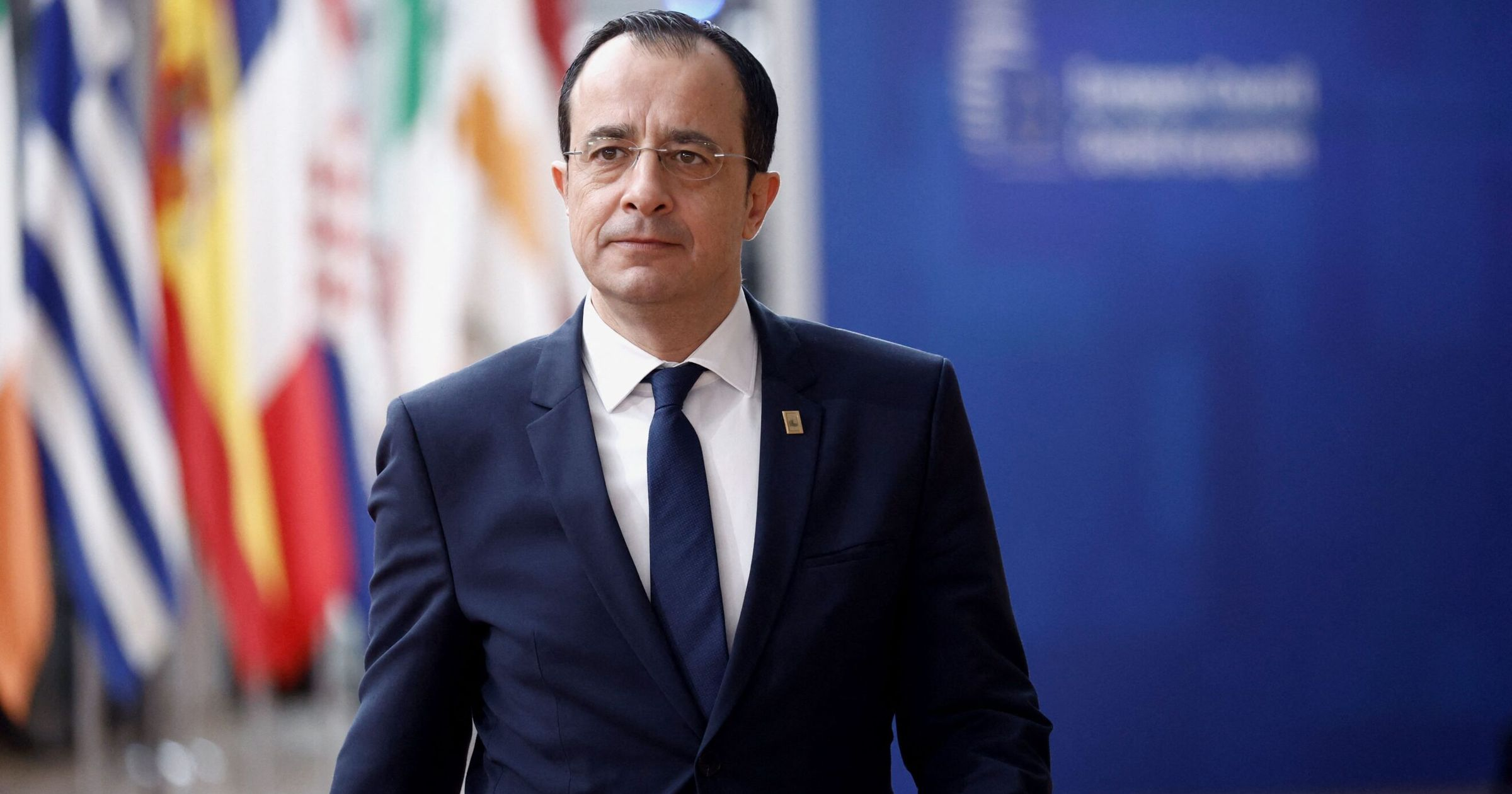
In practice, Cyprus follows the EU’s lead on Iran-related sanctions and policies, but it also offers itself as a mediator. A notable recent example came in June 2025 when President Nikos Christodoulides announced that Iran had asked Cyprus to relay “some messages” to Israel during a regional crisisreuters.com. Cyprus’s foreign minister had just spoken with his Iranian counterpart, and although details were unclear (and Tehran denied sending any messages via Cyprusjpost.com), the episode underscored Cyprus’s intermediary role. Cyprus publicly appealed for restraint, offered to help evacuate third-country nationals, and urged all sides to avoid escalationreuters.com. In parliamentary remarks Christodoulides lamented the EU’s slow reaction to the Iran–Israel tensions and called for an extraordinary EU ministers’ meetingjpost.com, reflecting Cyprus’s eagerness to actively manage such crises.
Aside from this crisis, Cyprus keeps relatively low-profile relations with Iran. Contacts continue at the diplomatic level (ministers speak periodically), but issues like Iran’s nuclear program have not drawn Cyprus into confrontation. Overall, Cyprus balances its Western/EU commitments (e.g. support for sanctions when EU-mandated) with a pragmatic dialogue approach toward Tehran, using what leverage it has to encourage de-escalation.
Relations with the European Union
Cyprus’s EU membership is central to its diplomatic identity. As of May 2004 it is a full EU member stateen.wikipedia.org, which has given it both an enlarged diplomatic forum and obligations. Cyprus withdrew from the Non-Aligned Movement upon EU accession, signaling its commitment to a European foreign policy frameworken.wikipedia.org. Through the EU Cyprus cooperates on sanctions, trade, and aid policies toward Middle East countries. The EU has also imposed visa bans and arms embargoes (e.g. on Iran) that Cyprus implements.
However, Cyprus uses the EU as a megaphone for Middle Eastern issues. As noted above, its leaders have repeatedly urged Brussels to take stronger action in regional crisesreuters.comjpost.com. Cyprus’s presidencies of the EU Council (2012 and upcoming 2026) are explicitly being positioned as opportunities to bring Eastern Mediterranean and Levant stability to the EU agendaazure-strategy.com. For instance, analysts write that during its 2026 presidency Cyprus should “place conflict resolution at the top of the EU’s agenda” by drawing on its ties to Israel, Lebanon, and the Palestiniansazure-strategy.com.
At the same time, EU membership obliges Cyprus to align with common European policies. This can sometimes cause tension; for example, President Christodoulides publicly criticized the EU for a “slow reaction” to Middle East developments in mid-2025jpost.com. But overall, the EU provides Cyprus with diplomatic weight it otherwise lacks. By convening EU foreign ministers or using EU aid budgets (e.g. for Gaza or Lebanon relief), Cyprus can project influence far beyond its size. In summary, EU integration has transformed Cyprus from an isolated small state into a piece of a larger diplomatic bloc, which Cyprus seeks to steer toward its regional prioritiesazure-strategy.com.
Relations with Arab and Gulf States
Cyprus maintains wide-ranging ties across the Arab world, reflecting both its history and its evolving strategy of balancing different Middle Eastern actors:
- Palestinians and Levant: Cyprus has long supported the Palestinian cause. It recognized the PLO and provided a haven early onazure-strategy.comazure-strategy.com. As noted, Cyprus was one of the first countries to acknowledge Palestinian statehood (1988)meforum.org and it maintains Palestinian representation in Nicosia. Nicosia consistently backs a two-state solution and advocates Palestinian rights in international forumsazure-strategy.com. Cyprus’s relationship with Lebanon is especially strong. Cyprus took in around 100,000 Lebanese refugees during Lebanon’s 1975–1990 civil warazure-strategy.com, with many settling in cities like Larnaca and Limassol. In the 2006 Israel–Hezbollah war, Cyprus was the primary evacuation hub – it handled nearly 60,000 refugees and foreign nationals fleeing Lebanonreuters.com. This humanitarian role during Lebanon’s crises has given Cyprus considerable diplomatic “capital” with Beirut. Cyprus continues to press for Lebanon’s sovereignty (calling, for example, on compliance with UN Security Council Resolution 1701) and provided support after the 2020 Beirut port explosion (which sent another wave of migrants to Cyprusazure-strategy.com). The Cypriot foreign minister has also participated in international conferences on Lebanese recovery. Cyprus’s ties with Egypt and Jordan are warm but less in the spotlight. Both countries have embassies in Nicosia, and Cyprus cooperates with them in multilateral forums (e.g. Eastern Mediterranean gas discussions involving Egypt). During the 2025 regional crisis, President Christodoulides specifically reached out to Egypt’s and UAE’s leaders, indicating that Nicosia counts them as key partnersreuters.com.
- Gulf States (Saudi Arabia, Qatar, UAE, etc.): In the 21st century Cyprus has built new partnerships with Gulf Arab states as well. Qatar and Saudi Arabia have become especially important. Cyprus and Qatar coordinated on humanitarian aid: Qatar provided political and financial support for Cyprus’s proposed Gaza aid corridor (the “Amalthea” initiative)azure-strategy.com. Saudi Arabia now regards Cyprus as an EU–Middle East bridge. In April 2024 the two countries signed a mutual visa-exemption agreement for diplomatic passport holderssaudigazette.com.sa, and that year Cypriot President Christodoulides met Saudi Foreign Minister Prince Faisal to discuss regional securityazure-strategy.com. During the 2024 UN General Assembly, Saudi officials publicly praised Cyprus’s mediation role and reaffirmed support for a two-state solutionazure-strategy.com. These developments – culminating in high-level visits and cooperation agreements – signal a new era of Cyprus–Gulf engagement. Cyprus also maintains friendly relations with the United Arab Emirates. During the 2025 Iran–Israel crisis, Christodoulides spoke with UAE leaders (as he did with Egypt and Greece) to coordinate responsesreuters.com. (The UAE hosts a large Cypriot expatriate community and invests in Cyprus’s economy.) In all, Cyprus now seeks to be an interlocutor with various Arab players: it works with Lebanon and Palestinians on Levantine issues, with Egypt/Jordan in regional talks, and with Gulf states on broader security initiatives. This network of Arab relationships gives Cyprus influence as a mediator – for example, it has been able to draw on Saudi or Qatari support for its diplomatic initiativesazure-strategy.com.
Crisis Mediation, Humanitarian Aid, and Security Cooperation
Over time Cyprus has emerged as a regional facilitator in crises and cooperative security efforts. Its small size belies an outsized role in several areas:
- Evacuations and Refugees: Cyprus has repeatedly acted as an evacuation and refuge hub. During the 2006 Israel–Hezbollah war, roughly 60,000 people (foreign nationals and Lebanese) were evacuated via Cyprusreuters.com. Similarly, an estimated 100,000 Lebanese fled to Cyprus during Lebanon’s civil war in the 1970s–80sazure-strategy.com. More recently, as the 2024 Israel–Hezbollah confrontation loomed, Cyprus put its airports and ports on standby to assist any evacuations. Its National Guard and emergency services regularly train for these contingencies. The island also sheltered Syrian and Iraqi refugees who transited through Lebanon. This track record – combined with its geographical proximity – makes Cyprus a de facto staging area for regional crises.
- Humanitarian Corridors: Cyprus has proposed novel humanitarian solutions. In late 2023 it launched the “Amalthea” initiative, a maritime aid corridor between Larnaca and Gazaazure-strategy.com. Cyprus offered to ship humanitarian supplies to Gaza by sea, with Cyprus, U.S., and Israeli officials jointly inspecting all cargo to ensure only aid reached the Palestinians. Although the corridor was temporary and limited by ongoing fighting, it demonstrated Cyprus’s ability to broker a complex humanitarian operation under mutual trust. More broadly, Cypriot NGOs and the government contribute aid to war-torn areas (e.g. donations to UNRWA for Palestinians, relief convoys to Lebanon/Syria), leveraging Cyprus’s port access to the region.
- Diplomatic Forums: Nicosia actively hosts and attends international peace gatherings. Notably, in May 2009 Cyprus hosted a UN conference on Israeli–Palestinian peace, bringing together over 50 nations and UN officials to discuss a two-state solutionazure-strategy.com. In 2024 its Foreign Minister attended the Paris conference on Lebanese reconstructionazure-strategy.com. These fora reinforce Cyprus’s image as a neutral ground and mediator. Cyprus is also a member of the Union for the Mediterranean and other regional organizations, where it often champions dialogue and reconciliation.
- Security Partnerships: On security, Cyprus is integrating into broader defense networks. It is a de facto NATO partner through its close ties with Greece and the hosting of British bases. Cyprus’s own National Guard has exchanged officers with U.S., Greek, and Israeli militaries. A landmark development in 2025 was the U.S. congressionally approved “American-Hellenic-Israeli Eastern Mediterranean Counterterrorism and Maritime Security Partnership Act”. This legislation explicitly expands U.S. military training in Cyprus (at the “CYCLOPS” center) and removes long-standing U.S. restrictions on arms sales to Cyprusekathimerini.com. U.S. analysts note this as “a major shift in U.S. policy” that signals growing trust in Cyprus as a key Eastern Mediterranean partnerekathimerini.com. In practice, Cyprus now hosts joint training exercises (e.g. counterterror drills with U.S. and Greek forces) and contributes to NATO’s intelligence network on Mideast issues (within EU/NATO fusion cells). Its security cooperation extends to Israel as well – for example, Cyprus has participated in trilateral Greece-Cyprus-Israel exercises, and it granted basing rights to Greek and Israeli warships at Limassol harbor during joint maneuvers.
In sum, Cyprus today leverages its location and relationships to mediate crises and build security links. Its evacuation of civilians, hosting of refugees, and innovative aid corridors have earned it a reputation as a humanitarian coordinator. At the same time, its embrace of security partnerships (EU, U.S., Greece/Israel) has raised its profile as a reliable defense collaborator. These dual roles reflect an evolving influence: Cyprus has transformed from a sidelined Cold War actor into an active facilitator of dialogue and stability in the Eastern Mediterranean
-

-

-
-

