By MUHAMMED DANBABA
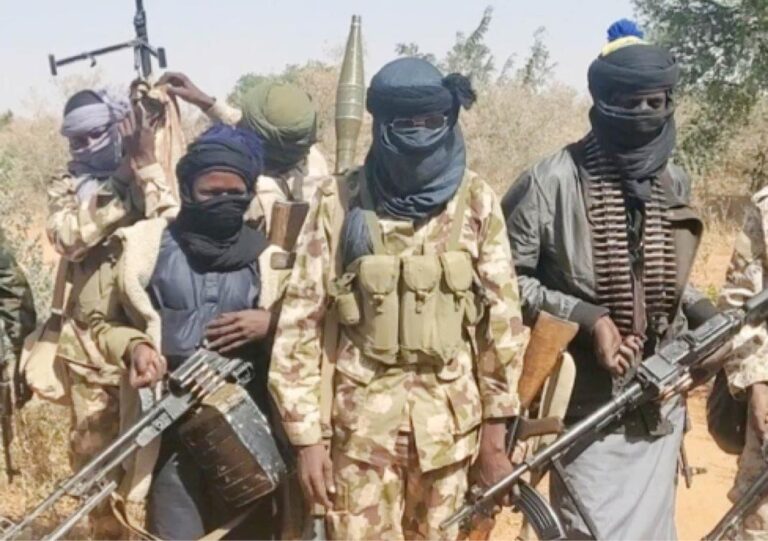
The persistent wave of bandit attacks and kidnappings in Sokoto State has reached a breaking point. Youths in Shagari Local Government Area (LGA) are now openly considering taking up arms in self-defence, citing government failure to protect lives and property.
This rising tension, articulated in a statement signed by Bello Bala Shagari, a prominent youth activist and grandson of former Nigerian President Shehu Shagari, highlights a dangerous turn in the ongoing insecurity plaguing north-western Nigeria.
Background: Rising Insecurity in North-West Nigeria
The spread of banditry in Sokoto, Zamfara, Katsina, and Kebbi
For years, states across the North-West region—Sokoto, Zamfara, Katsina, and Kebbi—have endured waves of armed banditry. Initially seen as rural disputes over grazing and farming land, the crisis has transformed into large-scale organized crime, including mass abductions, ransom-taking, and deadly raids.
The impact of kidnappings on education and community life
Schools have become prime targets. In February 2021, 279 schoolgirls were abducted from Jangebe in Zamfara State. Similarly, Niger State witnessed the kidnapping of 156 pupils from Salihu Tanko Islamiya School, Tegina. These incidents not only traumatized families but also forced mass school closures, denying children their right to education.
The Shagari Youths’ Statement
Bello Bala Shagari’s leadership and influence
Bello Bala Shagari, leveraging both his political heritage and his grassroots connections, has become a voice for disenfranchised youths. His words carry weight, especially as frustration grows in Sokoto communities.
Key points from the online youth meeting
In their meeting, the youths expressed deep disappointment at the lack of government action. They stressed that while peace was their first choice, self-defence may be the only remaining option if attacks persist.
Why self-defence is being considered
With entire villages abandoned, farmlands destroyed, and families displaced, the youths feel abandoned. They argue that defending their homes might be the only way to prevent complete collapse of their communities.
Government Response and Perceived Failures
Sokoto State Government’s role in security
The Sokoto State Government has repeatedly promised improved security, but residents argue that words have not translated into real action.
Federal Government and military operations
The Nigerian Army has launched operations like Operation Hadarin Daji to curb insecurity. Yet, despite heavy investment in military presence, attacks remain widespread.
Citizens’ frustration with unfulfilled promises
For residents, the repeated cycle of government assurances followed by renewed attacks has eroded trust in leadership.
The Consequences of Armed Self-Defence
Security experts’ warnings on escalation
Analysts warn that if youths take up arms, the result could be retaliatory attacks, spiraling violence, and further instability.
The vigilante experience: Yan Sakai in Zamfara and Katsina
In Zamfara and Katsina, the Yan Sakai vigilante groups emerged as a response to insecurity. While they offered temporary relief, they also fueled cycles of revenge killings and reprisal attacks, worsening the crisis.
Social and Economic Impacts of Banditry
Displacement of farming families
Thousands of farming families have been forced to flee, leaving behind fertile land and livestock.
Collapse of rural economies
Markets have been deserted, trade disrupted, and poverty deepened as communities lose their livelihoods.
The psychological toll on communities
Beyond material losses, people live in constant fear, unable to sleep peacefully or send their children to school.
Possible Solutions to the Crisis
Strengthening state security presence
One of the most urgent demands from Shagari youths is for the deployment of more security personnel. Many rural areas in Sokoto are left unguarded, making them easy targets for bandits. A stronger police and military presence could help restore confidence among residents and deter attackers.
Community-based security approaches
While relying solely on vigilante groups has proven dangerous, structured community policing remains an option. Training local volunteers under state supervision could create trusted grassroots security networks that complement official forces without encouraging lawlessness.
Dialogue, negotiation, and long-term reforms
Experts emphasize that military action alone cannot solve the crisis. Dialogue with repentant bandits, investment in education, job creation, and conflict-resolution programs are needed to address the root causes. Tackling youth unemployment, poverty, and corruption will help reduce the lure of criminality.
Voices from Civil Society
Amnesty International’s reports
Amnesty International and other human rights organizations have consistently documented abuses by both armed groups and security forces. Their reports stress that civilians are often caught in the middle—either extorted by bandits or harassed by poorly supervised security personnel.
Role of NGOs in peace-building
Non-governmental organizations are working to provide relief to displaced families, advocate for victims, and promote peace-building initiatives. Grassroots dialogue and empowerment projects are helping communities resist the cycle of violence.
Case Studies of Insecurity in the Region
Jangebe schoolgirls abduction
In February 2021, gunmen abducted 279 female students from Government Girls Secondary School, Jangebe. Though many were released, the trauma continues to haunt the community, and parents remain reluctant to send their daughters back to school.
Tegina Islamiya School kidnapping
In Niger State, 156 pupils were seized from Salihu Tanko Islamiya School in Tegina. Some children remained in captivity for months, highlighting the slow pace of government response and the enormous financial pressure of ransom payments.
Sabon Birni massacre
In late 2021, over 40 travellers were brutally killed in Sabon Birni LGA of Sokoto. This massacre remains one of the darkest reminders of how insecurity has spiraled out of control in the region.
What the Future Holds for Shagari LGA
Risks of vigilantism vs. state security interventions
If Shagari youths move forward with armed self-defence, the state could face a parallel security structure—a reality that has destabilized Zamfara and Katsina. Without strong government intervention, Sokoto risks following the same destructive path.
Calls for urgent government action
The message from Shagari is clear: urgent and concrete measures are needed. Without decisive action, the line between protection and retaliation may blur, and the security crisis could spiral further out of control.
FAQs on Banditry and Community Security in Sokoto
1. Why are Shagari youths considering self-defence?
Because of persistent bandit attacks, kidnappings, and displacement, coupled with what they see as the government’s failure to protect them.
2. Who is Bello Bala Shagari?
He is a youth activist and grandson of former President Shehu Shagari, now a leading voice for Sokoto youths demanding action against insecurity.
3. What are the risks of self-defence groups?
While they can offer immediate relief, they often lead to reprisals, cycles of violence, and human rights abuses, as seen with Yan Sakai in Zamfara.
4. What role does the government currently play?
The Federal and State governments have deployed the military and launched operations like Operation Hadarin Daji, but communities argue that these efforts remain inadequate.
5. How has banditry affected farming communities?
Thousands of farmers have been displaced, crops destroyed, and rural economies devastated, leading to food insecurity.
6. What long-term solutions are being proposed?
Experts recommend a mix of security reinforcement, community policing, dialogue, job creation, and education reforms to tackle the root causes.
Conclusion: A Call for Action Before Desperation Deepens
The situation in Shagari LGA of Sokoto State reflects a broader crisis facing northern Nigeria. Banditry and kidnappings are not just security issues—they are humanitarian and economic catastrophes. The warning from youths is a wake-up call to the government: act decisively or risk losing public trust entirely.
If left unaddressed, the growing calls for self-defence may lead to widespread vigilantism and further destabilize an already fragile region. But with the right balance of military strength, community engagement, and socio-economic reforms, Sokoto and its neighbours can still reclaim peace.
For more on Nigeria’s security challenges, visit Amnesty International’s reports on Nigeria
-

-

-

-