

Countries Progress After Secession, Nigerian Nations Will Progress If Separated
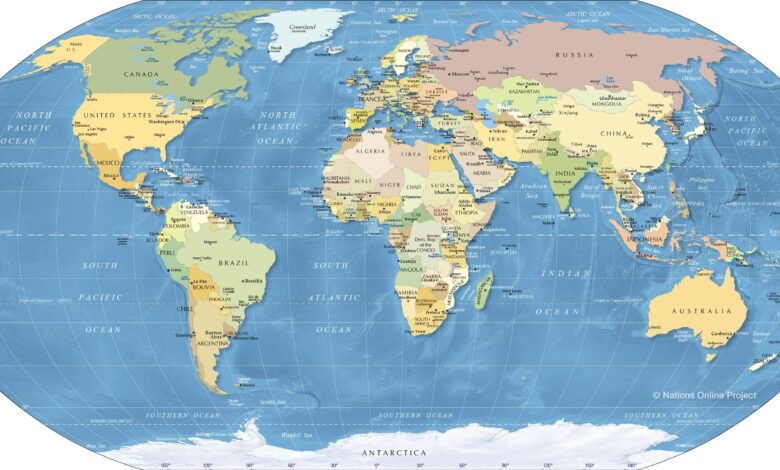
Separation is not about war, it has peaceful aspect, according to what @Aminu Sa’ad Beli wrote on his wall.
In 1776, the USA split from the UK
In 1830 Belgium separated from the Netherlands
In 1965, Singapore split off from Malaysia
in 2002, East Timor got split off from Indonesia
In 1921, Ireland split off from the United Kingdom, and (possibly in the future) there will be secession of Scotland.
In 1944, Iceland split from Denmark with remarkable ease.
In 1905 Norway split from Denmark
In 1905, Norway and Sweden also peacefully split ways. One got the car. the other got the kids.
In 1947, the British India Dominion was partitioned into India n Pakistan. In 1971, Bangladesh secceeded from Pakistan.
In 1992-93, the two parts of Czechoslovakia agreed to each go their own way. Thus were born the Czech Republic and Slovakia after what’s been named the “Velvet Divorce”., About the same time, another kind of separation occurred, of course, in Yugoslavia. This one led to a bloodshed.
in 1965, Singapore split from Malaysia for a variety of reasons, including religious (Malaysia is majority Muslim, Singapore isn’t), ethnic/racial (Singapore has a very large majority Chinese population) and concerns over the Malaysian Bumiputra policy, which was (and is) basically a form of “Affirmative Action” for Muslim Malaysians – who make up the majority population in Peninsular Malaysia.
Ethiopia and Eritrea
Sudan and South Sudan are now separate countries
USSR is now broken down into several countries.
I see separation as an avenue for a healthy competition for development as the case of Singapore and Malaysia, India and Pakistan, Norway/Denmark/Switzerland.
In the case of Nigeria, I am sensing a healthy competitive development among the original component part, the North/West/East each making useful progress while competing with the others.
It is not about war after all there is nothing wrong for one to decide he is no longer comfortable with the union and therefore want to opt out.
LETS GIVE PEACE A CHANCE AND SEPARATE HONORABLY.
This is worth sharing over and over again…
British named them Burma. They rejected it, restructured & renamed themselves Myanmar.
-British named them Upper Volta, but they rejected it, restructured and renamed themselves Burkina Faso – Land of Incorruptible People.
-British named them Gold Coast, they rejected it, restructured and renamed themselves Ghana.
-British named them Southern Rhodesia. They rejected it, restructured and renamed themselves Zimbabwe.
-British named them Northern Rhodesia. They rejected it, restructured and renamed themselves Zambia.
-British named them Tanganyika. They rejected it, restructured & renamed themselves Tanzania.
-Germans named them colony of South West Africa. They rejected it, restructured and renamed themselves Namibia.
-France named them Dahomey. They rejected it, restructured and renamed themselves Benin.
-Belgium named them Zaire. However, they rejected it, restructured & renamed themselves Democratic Republic of Congo (DRC).
-Britain named a bunch of people – Nigeria. They rather kill to preserve it than restructure and give themselves a befitting new name.
“It is only an animal that bears the name that is given to it by his enemy” (Proverb).
THE FUTILITY OF PRESERVING NIGERIA
My angry reaction earlier today on APC UK platform:
Most of the Diasporans here living in Europe. Can you show me one multi-ethnic state in Europe where one group is positioned to dominate the rest that hasn’t broken up?
For those who do not know, what you call ethnic groups in Nigeria are called nations in Europe.
There’s nowhere in the world where the white man accepts domination from another white man in perpetuity.
It used to be so under the Roman empire and the like. Not anymore. The Communists tried it, dividing society into capitalists and proletariats, deluding themselves that ethnicity is effectively swept under the carpet, but what followed? The Communist edifices in Czechoslovakia, Yugoslavia, and the big brother, USSR, all collapsed, while the two Germans that are ethnically the same but split by communism vs capitalism were reunited. Such is the power of ethnic nationalism.
Czechoslovakia was made up of two ethnic groups, the Czech and the Slovakians. Both separated peacefully on 1st January 1993. The former is today 10.6 million people and the latter 5.4 million. Added together, they’re not up to Lagos. Yet, they split for peace. Two masters can’t be in the same house.
Yugoslavia in 1991 was 23.2 million, barely more than Lagos population. It broke into six countries same year – all along ethnic lines, namely: Bosnia and Herzegovina, Croatia, Macedonia, Montenegro, Serbia, and Slovenia.
Then the big brother, USSR. It had, at least, the following ethnic groups identified by their languages:
Regional languages:
Ukrainian
Belarusian
Uzbek
Kazakh
Georgian
Azerbaijani
Lithuanian
Moldavian
Latvian
Kyrgyz
Tajik
Armenian
Turkmen
Estonian
Minority languages:
Abkhaz
Bashkir
Buryat
Chechen
Finnish
Volga German
Korean
Ossetian
Tatar
& various others.
Today, your fingers will not be enough to count the number of countries that have emerged from the USSR.
Sit down there and be preaching unity in Nigeria as if you’re the kindest gentleman on earth while you have no solution to the genocide in Southern Kaduna, the illegal but officially condoned arms in the hands of killer herdsmen roaming the country, and be condemning those better informed about the fact that the country is undergoing the strains of a forced union and should be peacefully restructured or let people go their separate ways.
You can read more of such stories at Credible News
- Insecurity: 15 Terror Groups Are In Nigeria To Seize FCT, Organisation Warns
- Terror Attack: Where Will Nigerians Run To As U.S. Evacuates Embassy Staff, Families In Abuja
In Europe, the two best examples of fairly stable multi-ethnic states are the UK and Switzerland. The former is led by reasonable men who permitted regional autonomy to the Irish, the Scots and the Welsh, while the English dominate Westminster. That’s something some of us are asking for, but you’re fighting against it in your own country wracked by ethnic crisis. Your own people are better off under oppression of fellow black men because your people have bad leaders who can’t do better than their new internal colonisers.
The latter country, Switzerland, has four ethnic groups. Each of them rotates the presidency annually through seven cantons that constitute the federation units. All the four languages of the four ethnic groups are recognized as official languages and school languages to boot, namely: German, French, Italian, and Romansch that has just a few thousand speakers!
There’s nowhere in the world where the Caucasians allow the domination of their group by another.
In Canada, Quebec is the only full French-speaking province, aside a little section of New Brunswick. The other seven provinces are English-speaking. Yet, Canada is bilingual for the sake of Quebec! And each of the provinces is largely self-governing.
Here we are in Nigeria, you have people arguing vehemently that a decrepit, structurally-flawed, and crisis-prone artificial contraption badly configured by the British only needs good people to survive. Why not centralise the powers of the British regions to London and see what happens?
My Conclusion:
When many commentators read and repost or share your articles with many of their friends and contacts, they do so because they want others to learn.
NIGERIA’S 36 STATES & FCT RANKED IN ORDER OF LAND SURFACE AREA (KM²)
- Niger State 76,363KM²
- Borno State 70,898KM²
- Taraba State 54,473KM²
- Kaduna State 46,053KM²
- Bauchi State 45,837KM²
- Yobe State 45,502KM²
- Zamfara State 39,762KM²
- Adamawa State 36,917KM²
- Kwara State 36,825KM²
- Kebbi State 36,800KM²
- Benue State 34,059KM²
- Plateau State 30,913KM²
- Kogi State 29,833KM²
- Oyo State 28,454KM²
- Nasarawa State 27,117KM²
- Sokoto State 25,973KM²
- Katsina State 24,192KM²
- Jigawa State 23,154KM²
- Cross River State 20,156KM²
- Kano State 20,131KM²
- Gombe State 18,768KM²
- Edo State 17,802KM²
- Delta State 17,698KM²
- Ogun State 16,762KM²
- Ondo State 15,500KM²
- Rivers State 11,077KM²
- Bayelsa State 10,773KM²
- Osun State 9,251KM²
- Federal Capital Territory 7,315KM²
- Enugu State 7,161KM²
- Akwa Ibom State 7,081KM²
- Ekiti State 6,353KM²
- Abia State 6,320KM²
- Ebonyi State 5,670KM²
- Imo State 5,530KM²
- Anambra State 4,844KM²
- Lagos State 3,345KM²
Anambra + Enugu + Abia + Imo + Ebonyi = 29,525KM²
Kogi = 29,833KM²
Ogun + Oyo + Osun + Ondo + Ekiti = 76,320KM²
Lagos = 3,345KM²
Niger alone = 76,363KM²
Niger State = Entire Southwest States – Lagos
*The entire Southeast
is a little less than Kogi State only.
Just for our record
The North Has enough land for ranching and cattle colony.
We in the South West have little land mass. PLEASE LET US BE; LEAVE US ALONE TO MANAGE THE LITTLE LAND WE HAVE
GLOBAL CATTLE BUSINESS: FACT SHEET
A. Top 10 NATIONS in terms of cattle inventory (2017).
- INDIA 303 million
- BRAZIL 226 million
- CHINA 100 million.
- USA 93 million.
- EU 89 million.
- ARGENTINA 53 million
- AUSTRALIA 27 million
- RUSSIA 18 million
- MEXICO 16 million
- TURKEY 14 million.
B. TOP 10 MILK EXPORTERS
- NEW ZEALAND $4.4 Billion
- GERMANY $2.6 Billion
- NETHERLANDS $1.9 Billion
- FRANCE $1.5 Billion
- USA $1.4 Billion
- BELGIUM $1.2 Billion
- AUSTRALIA $852 Million
- BELARUS $637 Million
- UK $569 Million
- SAUDI ARABIA $556 Million
C. TOP 10 BEEF EXPORTING NATIONS (2016).
- AUSTRALIA $5.6 Billion
- USA $5.2 Billion
- BRAZIL $4.3 Billion
- INDIA $3.7 Billion
- NETHERLANDS $2.7 Billion
- IRELAND $2 Billion
- NEW ZEALAND $1.9 Billion
- CANADA $1.5 Billion
- URUGUAY $1.4 Billion
- GERMANY $1.3 Billion
Additional Considerations:
- Nigeria is not among the top 20 nations in the global cattle business.
- Non of the top cattle producing nations create cattle colonies or engage in primitive cattle grazing. All the top cattle producing and exporting nations utilise modern technology and ranching methods to maximise production and profit.
- Non of the top nations earning billions of dollars annually from the cattle business condone the killing of citizens for cattle.
- Nigeria’s cattle business requires a complete re-think now and not later, for posterity’s sake.
Share to educate our leaders and citizens!
You can read more of such stories at Credible News and The Cheer News


