

Why Do Powerful Nations Display Their Weapons Publicly? The Hidden Messages Behind Military Showcases
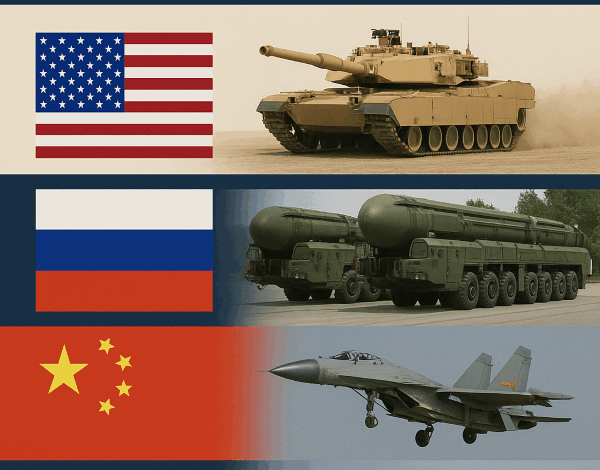
Explore the key reasons powerful nations display their weapons publicly — from deterrence and diplomacy to psychological warfare. How the U.S., Russia, China, North Korea, and Britain use military showcases to project power.
The Global Theatre of Power
Every few months, the world watches as military parades roll through the streets of Moscow, Beijing, or Pyongyang. Fighter jets roar above Washington D.C., and Britain’s Royal Navy proudly sails through international waters. These moments are more than national pride — they are strategic performances.
- #America’sWeaponryandStrategyDuringWar
- South Korea Battle Ready For North Korea’s Nuclear and Missile Threats
The reasons powerful nations display their weapons publicly go far beyond the spectacle. Such shows are part psychological warfare, part diplomacy, and part deterrence. They communicate strength without firing a single shot.
1. A Message of Deterrence
One of the clearest reasons powerful nations display their weapons publicly is deterrence. In a world where military power still defines geopolitical influence, nations use public displays to send a clear message: “We are ready if you dare.”
The United States, for instance, frequently conducts air and naval drills in the Indo-Pacific to demonstrate its readiness against growing Chinese influence. Washington’s military parades, flyovers, and live-fire demonstrations are aimed at keeping both allies reassured and adversaries cautious.
Similarly, Russia’s annual Victory Day Parade in Moscow is not merely a remembrance of World War II; it’s a calculated show of current strength — an armored procession meant to remind NATO and the West of Moscow’s enduring military capabilities.
2. Domestic Propaganda and National Unity
Displaying military might also serves a domestic purpose. For leaders facing internal criticism or waning popularity, a grand show of power can reignite national pride and distract from domestic problems.
In North Korea, Kim Jong Un’s regime depends heavily on this tactic. Every missile parade in Pyongyang’s Kim Il Sung Square doubles as both a warning to foreign powers and a psychological boost to North Korean citizens. It reinforces the image of strength and invincibility — even in the face of crippling sanctions and economic hardship.
China, too, uses similar displays to rally patriotism. The People’s Liberation Army Day parades are meticulously choreographed events that emphasize the unity between the Communist Party and the armed forces, reassuring citizens that the country is secure under strong leadership.
3. International Signaling and Strategic Diplomacy
Public weapon displays are not always about threats. Sometimes, they serve as subtle diplomatic tools. Nations reveal — or conceal — parts of their military technology to influence negotiations or send political signals.
The United States often uses military exercises near allied territories, such as Japan or South Korea, to demonstrate its commitment to regional stability. Conversely, Russia and China sometimes unveil new weapons at international expos or joint drills to attract defense partnerships and buyers, reinforcing their roles as major players in global arms trade.
Britain, though less flamboyant, participates in multinational naval exercises like Operation Steadfast Defender, emphasizing its loyalty to NATO and its readiness to uphold global maritime security. Such participation sustains its influence on the world stage even in the post-Brexit era.
4. Showcasing Technological Advancements
Modern warfare is as much about perception as performance. When countries unveil hypersonic missiles, stealth bombers, or next-generation tanks, they’re not just flaunting hardware — they’re announcing a leap in military innovation.
In recent years, China unveiled its DF-41 intercontinental ballistic missile and J-20 stealth fighter jets, signaling its arrival as a technological equal to the U.S. Similarly, Russia’s Avangard hypersonic glide vehicle was introduced to assert Moscow’s ability to outpace Western missile defense systems.
For America, displays like the F-35 Lightning II or the latest aircraft carrier deployments reinforce its image as the global standard in defense technology. These exhibitions also reassure allies and investors in U.S. defense industries that the Pentagon remains unmatched.
5. Psychological Warfare and Prestige
There’s also an emotional side to these displays — the battle for prestige. Nations like North Korea and Russia crave global recognition and fear being ignored. Public weapon showcases force the world to look their way, even if out of concern rather than admiration.
In the same vein, China’s 70th anniversary parade in 2019 was designed to show that it had risen from a “poor developing nation” to a military powerhouse. Meanwhile, Britain continues to use events such as Trooping the Colour and Royal Navy shows to preserve its centuries-old military heritage and project an image of enduring influence.
6. Reinforcing Alliances and Power Hierarchies
Military displays often double as reassurance mechanisms. For instance, when the United States showcases its nuclear submarines or long-range bombers, it’s not only warning rivals like Russia or China — it’s also assuring allies in NATO and the Pacific that America’s defense umbrella remains intact.
Russia and China, on the other hand, often coordinate joint drills — like the Vostok and Joint Sea exercises — to strengthen their partnership and challenge Western alliances. Such joint demonstrations highlight evolving global power hierarchies and the reemergence of a multipolar world order.
Conclusion: The Power of Perception
In essence, the reasons powerful nations display their weapons publicly boil down to one thing: perception. Strength in the 21st century is as much about how others see you as what you can actually do.
From Washington to Moscow, Beijing to Pyongyang, and London to the world’s oceans, these parades and flyovers remind us that the theatre of power is ongoing — and perception, in global politics, can be as potent as firepower itself.
#GlobalPower, #MilitaryParade, #Geopolitics, #USMilitary, #Russia ,#China, #NorthKorea, #Britain, #InternationalRelations, #MilitaryMight, #WorldPolitics,


