By DAYO ADESULU
The YABATECH Staff Schools reform agenda has taken centre stage following a high-level retreat convened by the Rector of Yaba College of Technology, Dr. Ibraheem Adedotun Abdul, who outlined a bold roadmap aimed at repositioning the institution’s primary and secondary schools for long-term sustainability and academic excellence.
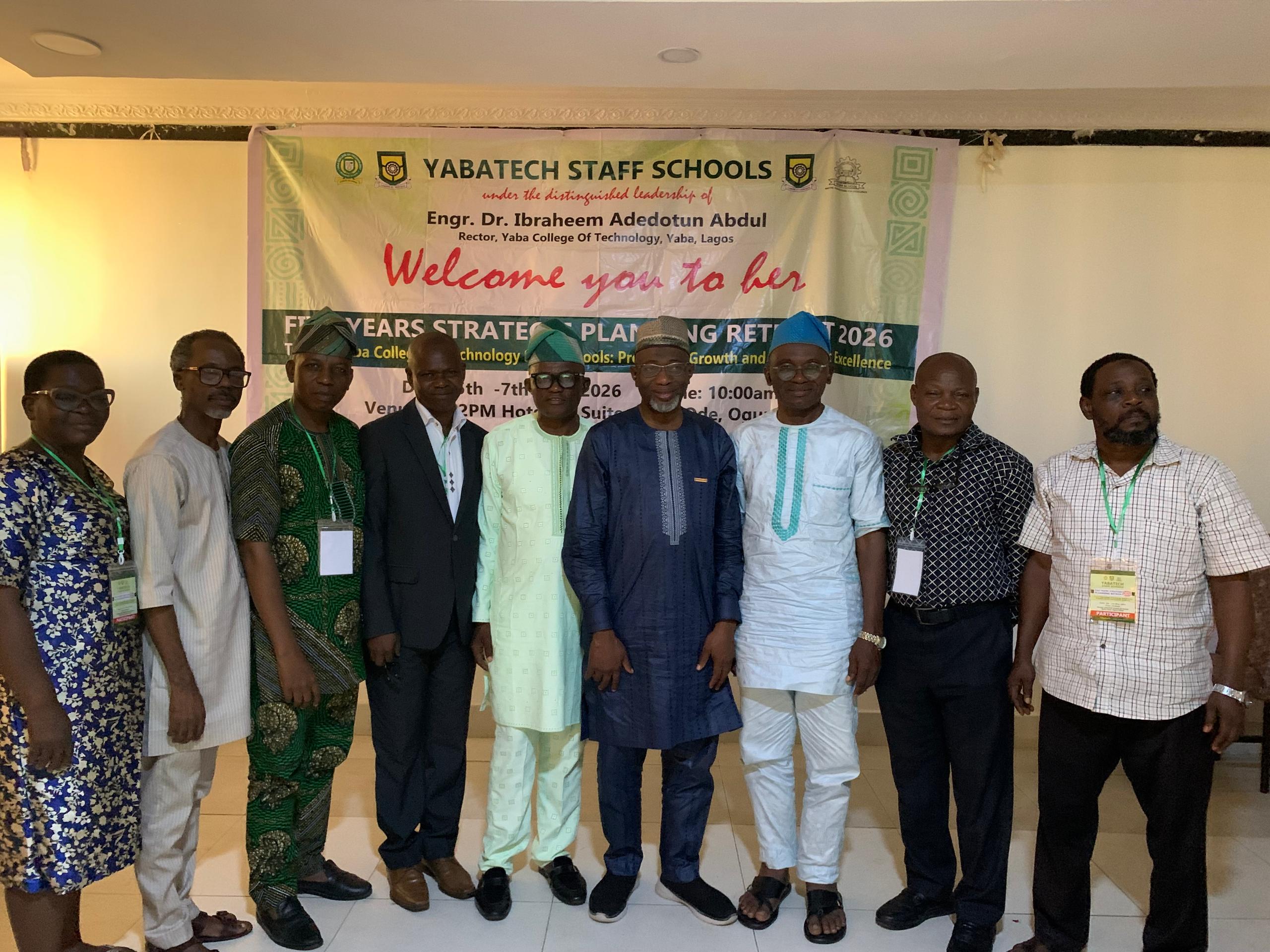
The retreat, held in Ijebu Ode, Ogun State brought together key stakeholders including members of the Board of Governors, administrators, and staff, all tasked with developing a strategic framework that will guide the schools from 2026 to 2030.
Strategic Reset for Long-Term Growth
Declaring the retreat open, Abdul described the gathering as a decisive moment in redefining the future of the Staff Schools. He stressed that the YABATECH Staff Schools reform agenda goes beyond routine planning, focusing instead on building resilient systems that can withstand financial and operational pressures.
According to him, the schools serve as a foundational pillar within the institution’s broader ecosystem, shaping the academic and moral development of young learners who often have their first contact with the YABATECH brand through these institutions.
“This is not just another meeting. It is a platform to make bold decisions that will determine the trajectory of our Staff Schools over the next five years,” Abdul said.
He urged participants to embrace practical thinking and commit to implementation, noting that strategic plans must translate into measurable outcomes.
Key Reform Priorities Identified
At the heart of the YABATECH Staff Schools reform agenda are several priority areas designed to strengthen institutional capacity and ensure sustainability.
Abdul highlighted the need to overhaul financial systems to boost internally generated revenue while also expanding student enrolment. He pointed out that improving financial independence remains critical to maintaining quality education standards.
In addition, the Rector emphasised leadership development and administrative efficiency, stressing that strong governance structures would play a central role in achieving the desired transformation.
He also called for a renewed culture of discipline, accountability, and strict adherence to institutional policies, adding that excellence must become a defining feature of the schools.
Five-Year Strategic Plan in Focus
The retreat, themed “Yaba College of Technology Staff Schools: Prospects, Growth and Academic Excellence,” is expected to culminate in a comprehensive five-year strategic plan.
Participants engaged in intensive sessions covering school finance, sustainable growth, leadership dynamics, and conflict management. These discussions aimed to align institutional goals with operational realities, ensuring that policies remain practical and achievable.
The YABATECH Staff Schools reform agenda places strong emphasis on integrating vision, people, and processes. Abdul stressed that synergy among stakeholders would be essential in translating policy into action.
Board Chairman Highlights Staff-Centred Policies
In his welcome address, Chairman of the Board of Governors, Dr. Abiodun Waidi Ashiru, described the retreat as a deliberate move to institutionalise forward-looking policies that recognise staff as central to educational success.
Ashiru noted that global trends in education now demand continuous capacity building and digital adaptation. He argued that teachers and administrators must be supported with clear policies, professional development opportunities, and an enabling work environment.
“Strategic planning must reflect the realities of those who implement it,” he said, adding that staff require both direction and support to perform effectively.
Workshops Drive Policy Innovation
Throughout the retreat, participants engaged in structured workshops designed to produce actionable outcomes under the YABATECH Staff Schools reform agenda.
Sessions focused on leadership accountability, performance evaluation systems, and conflict resolution mechanisms aimed at promoting fairness and transparency.
Stakeholders examined ways to strengthen staff retention and motivation, while also addressing broader welfare concerns. Discussions extended beyond remuneration to include professional growth, inclusive decision-making, and improved communication systems.
Participants also developed measurable Key Performance Indicators (KPIs) tied to institutional goals, ensuring that progress can be tracked effectively over the next five years.
Addressing Risks and Implementation Challenges
Group sessions identified potential risks that could hinder implementation of the YABATECH Staff Schools reform agenda, including funding constraints, workforce shortages, and resistance to change.
However, participants expressed optimism that a structured and policy-driven approach would mitigate these challenges. They agreed that empowering staff through clear frameworks and support systems would enhance accountability and improve teaching quality.
Education facilitators at the retreat further stressed the importance of building a culture rooted in trust, collaboration, and shared responsibility.
Commitment to Action and Institutional Renewal
As the retreat concluded, stakeholders reaffirmed their commitment to translating discussions into concrete actions within the 2026–2030 strategic plan.
There was a strong consensus that embedding staff welfare and empowerment into institutional policies would play a decisive role in achieving sustainable growth.
The YABATECH Staff Schools reform agenda is expected to produce a clear implementation framework that will guide the schools’ development, ensuring they remain competitive within Nigeria’s evolving education landscape.
Abdul expressed confidence that the retreat would mark the beginning of a new era defined by innovation, resilience, and excellence.
“Let this moment signal renewed dedication to building stronger schools that uphold the values and legacy of Yaba College of Technology,” he said.
With actionable recommendations now in place, attention shifts to execution—where the real test of the reform agenda will lie.
#YABATECH #EducationReform #NigeriaEducation #AcademicExcellence #SchoolDevelopment #PolicyReform
-

-

-

-