By MUHAMMED DANBABA
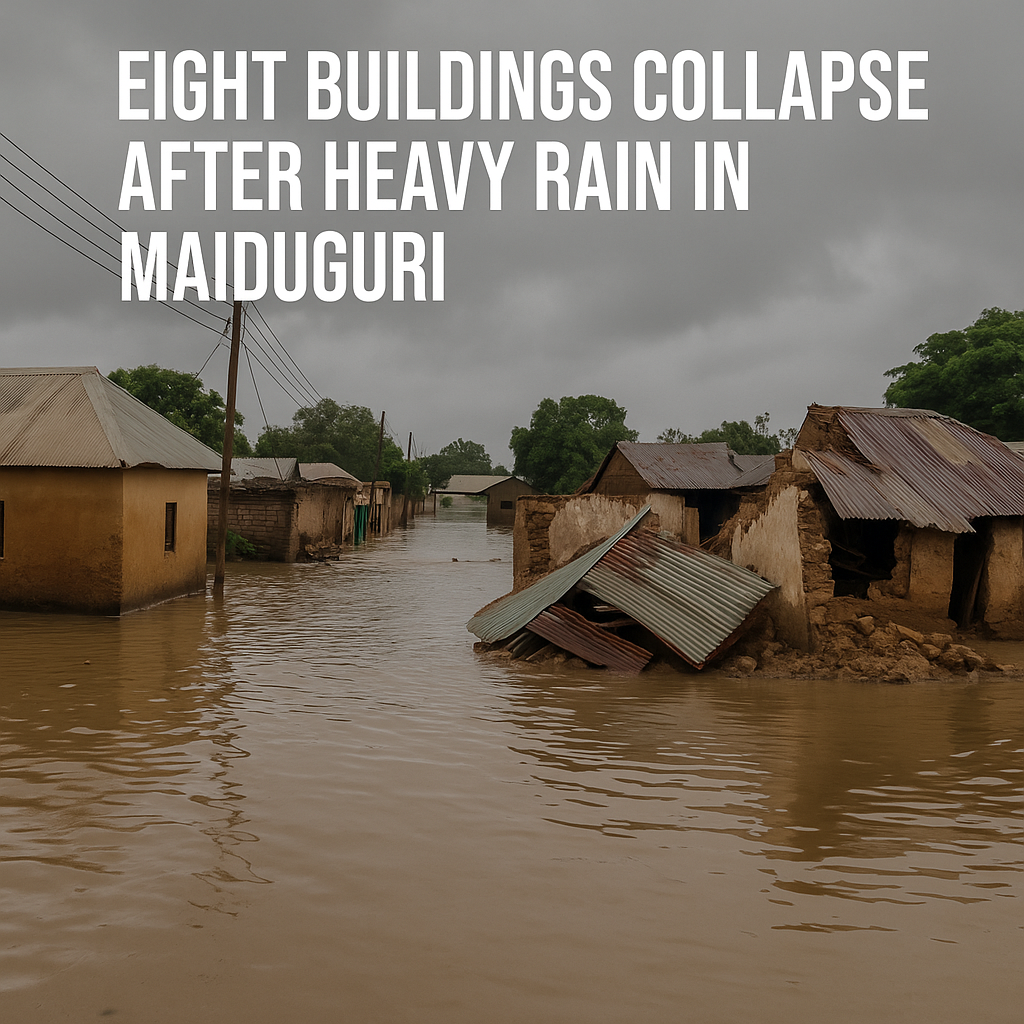
MAIDUGURI, July 2025 — Heavy rainfall early Wednesday morning in Maiduguri, capital of Borno State, caused the collapse of eight buildings, displacing dozens of residents in low‑lying riverbank communities. The incident underscores the growing risk of urban flood disasters in the region and echoes past catastrophic flood events triggered by dam failures.
Maiduguri Buildings Collapse After Heavy Rain, Forcing Evacuation
Rainfall began around 6:15 am and lasted approximately three hours, inundating areas such as Bulumkutu, Moduganari, and Ngomari. Many residents fled as floodwaters entered homes around 8 am, including a resident who promptly evacuated his family when water rose alarmingly.
Shops also suffered losses: one owner, Aisha Suraju, reported complete ruin of goods stored at floor level. There were fortunately no casualties reported. The Borno State Police Command swiftly deployed officers to patrol affected zones and prevent looting as displaced families await relocation.
Historical Context: Alau Dam Collapse & 2024 Flood Devastation
While this week’s incident stems from intense localized rainfall, the memory of the September 2024 Alau Dam breach still looms large. That tragedy submerged up to 15–40% of Maiduguri, claimed at least 30 lives, displaced over 400,000 residents, and even released dangerous zoo animals into urban areas. The flood left severe damage across residential and institutional zones.
According to NEMA and UN reports, at least 414,000 people were displaced during the calamity and nearly one million people were affected overall.
Police recovered 11 decomposed bodies in rescue operations between September 11 and 12, 2024.
- Lagos Building Collapse: One Dead, 3 Injured
- https://www.thecheernews.com/lagos-building-collapse-one-dead-3-injured/
How This Rainfall Disaster Compares
| Event | Cause | Buildings Collapsed | Displaced Residents | Casualties |
|---|---|---|---|---|
| July 2025 | Heavy rain | 8 | Several families | None |
| Sept 2024 | Dam breach + rain | Hundreds | ~414,000 | ~30+ |
Wednesday’s event, while smaller in scale, highlights the recurring vulnerability of Maiduguri’s riverbank settlements to flash floods, even without dam collapse.
Actions & Responses
The Borno State Police, led by ASP Nahum Daso, initiated rescue operations, including evacuations and patrols to secure abandoned properties. Civic messaging urged families to steer clear of floodwaters, particularly advising parents to keep children indoors due to safety concerns. The Commissioner of Police, Naziru Abdulmaji, praised officers’ prompt action and encouraged calm civic behaviour.
Why This Matters
- Building Resilience for Communities
Frequent flooding—triggered by both rainfall and structural dam failures—continues to expose structural weaknesses in Maiduguri’s housing and drainage systems. Local communities are particularly exposed due to proximity to waterways. - Need for Infrastructure & Planning Reform
Urban planning must incorporate robust flood management systems. Officials previously warned about the Alau Dam risk ahead of its collapse, but inadequate action led to disastrous delays. - Emergency Preparedness
Public agencies like NEMA, SEMA, and the police need proactive coordination—not reactive scramble—to protect high-risk neighborhoods ahead of severe weather events. This becomes more urgent with increased rainfall anomalies driven by climate change.
Looking Forward: Preventing Future Flood Damage
- Enhance flood early warning systems and use weather forecasts to activate preventive evacuations proactively.
- Upgrade urban drainage and discourage construction on flood-prone land.
- Repair and maintain dams proactively, not after signs of failure emerge.
- Expand community preparedness, including training and emergency kits in vulnerable districts.
Broader Flood Trends in Nigeria
Earlier in 2025, the Mokwa flood in Niger State killed over 500 people, injured hundreds, and displaced thousands—highlighting the escalating national threat from climate-driven flood disasters. ([turn0sear
Flood warnings now cover more than 30 states, with approximately 1,200 communities at moderate to high risk.
This week’s flooding in Maiduguri, leading to eight building collapses and resident displacement, reflects a troubling trend of urban climate vulnerability in Nigeria’s northeast. Though no lives were lost this time, the structural and policy lessons remain critical. Governments, agencies, and communities must act now to strengthen infrastructure, preparedness, and resilience before the next rainfall turns deadly.
#MaiduguriFlood, #BornoFloods, #ClimateResilienceNG, #InfrastructureNow, #FloodPreparedness, #AlauDamMemories, #NigeriaFloodCrisis, #CommunityResilience, #EmergencyResponseNG,
-

-

-

-