Niger State Cholera Outbreak: Over 320 Discharged, 14 Dead

By MUHAMMED DANBABA
Niger State cholera cases discharged 320
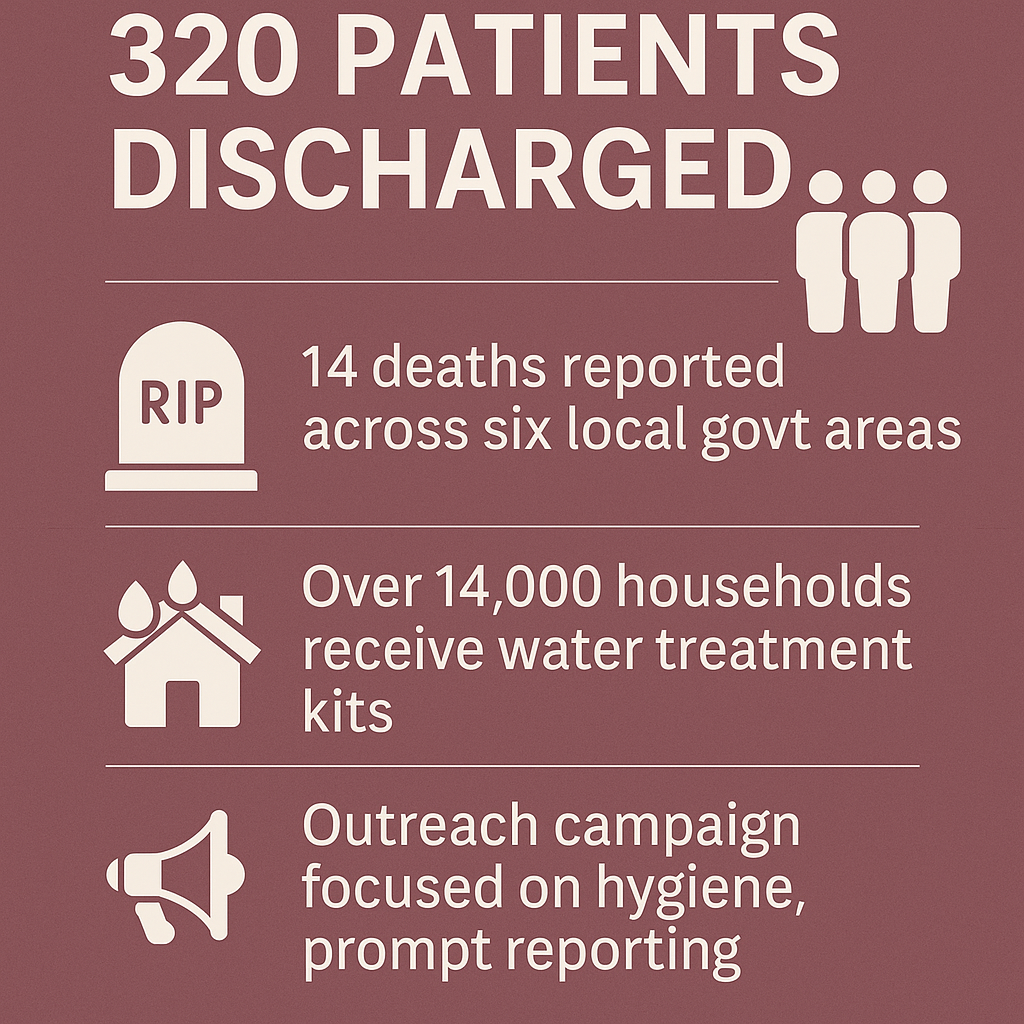
Niger State Cholera — Niger State has declared the cholera outbreak contained after the successful treatment and discharge of at least 320 patients, with fewer than 10 still receiving care. So far, 14 lives have been lost across six local government areas (LGAs) in the Niger State Cholera . Less than a week ago, the outbreak was linked to over 239 confirmed cases and 13 fatalities in Shiroro, Bosso, Chanchaga, Munya, Magama, and Bida LGAs.
Niger State Cholera Cases Discharged 320 Patients as Situation Improves
At a live interview on Radio Niger, Health Commissioner Dr. Ibrahim Dangana confirmed that of the 327 patients previously hospitalized, nearly all have recovered from the Niger State Cholera. “We recorded 14 deaths so far, and out of the 327 patients hospitalised… we have discharged virtually all of them and have less than 10 still on admission,” he stated.
State authorities also reported setting up Isolation Centres and Cholera Treatment Units (CTUs) in all 25 LGAs, key to containing the spread. The state’s disease surveillance mechanism was activated in all 274 wards, complementing emergency operation protocols.
- WHO Says a Child Dies from AIDS-related Illness Globally Every 5 Minutes
- Cholera Outbreak Raises Alarm in Ogun State Government
- Climate Change Impact Africans Health, As 47 million People Facing Acute Hunger – WHO
- https://crediblenews.com.ng/heavy-rain-in-maiduguri-collapses-eight-buildi/
UNICEF Provides Critical Support to Over 14,000 Households
In partnership with UNICEF, the government distributed water treatment kits, including chlorine solutions, calcium hypochlorite, purification tablets, and testing supplies, reaching 14,000+ households to curb the Niger State Cholera transmission. Health Specialist Idris Baba of UNICEF Kaduna Field Office affirmed that the supplies—ranging from rehydration kits to cholera beds and antibiotics—were sufficient to treat all current patients.
Aggressive Awareness Campaign Reaches Over 16,000 People
Dr. Dangana highlighted expanded sensitisation efforts, noting over 16,000 outreach interactions across schools, markets, religious institutions, and traditional courts. The goal was widespread education about hygiene, safe water usage, and prompt reporting of symptoms.
Regional Context: Multi-LGA Spread & Recent Mortality Trends
Outbreak reports emerged rapidly, with residents in six LGAs (notably Shiroro, Bosso, Chanchaga) among the worst-hit. Authorities reported 239–409 hospitalised cases, with fatalities ranging from 13 to 14. Medical responders activated rush measures including temporary isolation centres at Idris Ibrahim Kuta PHC in Minna and other PHC hubs across affected areas.
Lessons & Recommendations: Building Resilience Amid Cholera Threat
| Area | Response & Recommendation |
|---|---|
| Surveillance & Isolation | CTUs and active ward-based surveillance backed containment efforts |
| WASH Infrastructure | Limited access to potable water underscores need for long-term investment |
| Multi-sector Coordination | Roles of NSEMA, WHO, UNICEF, NCDC crucial for rapid intervention |
| Hygiene Education | Integrated public awareness via schools and religious networks proved vital |
Cholera remains endemic in Nigeria due to poor sanitation and unclean water—risks worsened during rainy seasons and cross-border movement. Previous incidents, such as the 2021 Gurara outbreak, showed similar patterns of high case fatality among children and waterborne transmission through open defecation.
✅ Conclusion: Steering Towards Containment & Prevention
With nearly all patients discharged and case counts declining, Niger State appears to have turned a critical corner in this cholera outbreak. The activation of surveillance systems, intensive outreach, and rapid establishment of treatment units were central to this progress.
Still, maintaining vigilance remains crucial. The state’s success hinges not only on treating existing cases but also on reinforcing clean water access, sanitation infrastructure, and strategic health education—particularly as rainy seasons cyclically increase the risk.
#NigerStateCholeraCasesDischarged320,
#CholeraOutbreakNG,
#CleanWaterNG,
#HealthInterventions,
#NigerStateHealth,
#UNICEFCholeraResponse,
#EndCholeraNigeria,
#WaterSanitationHygiene,