Overview of the Demolition Incident
What Happened at the Property Site in Ikeja?
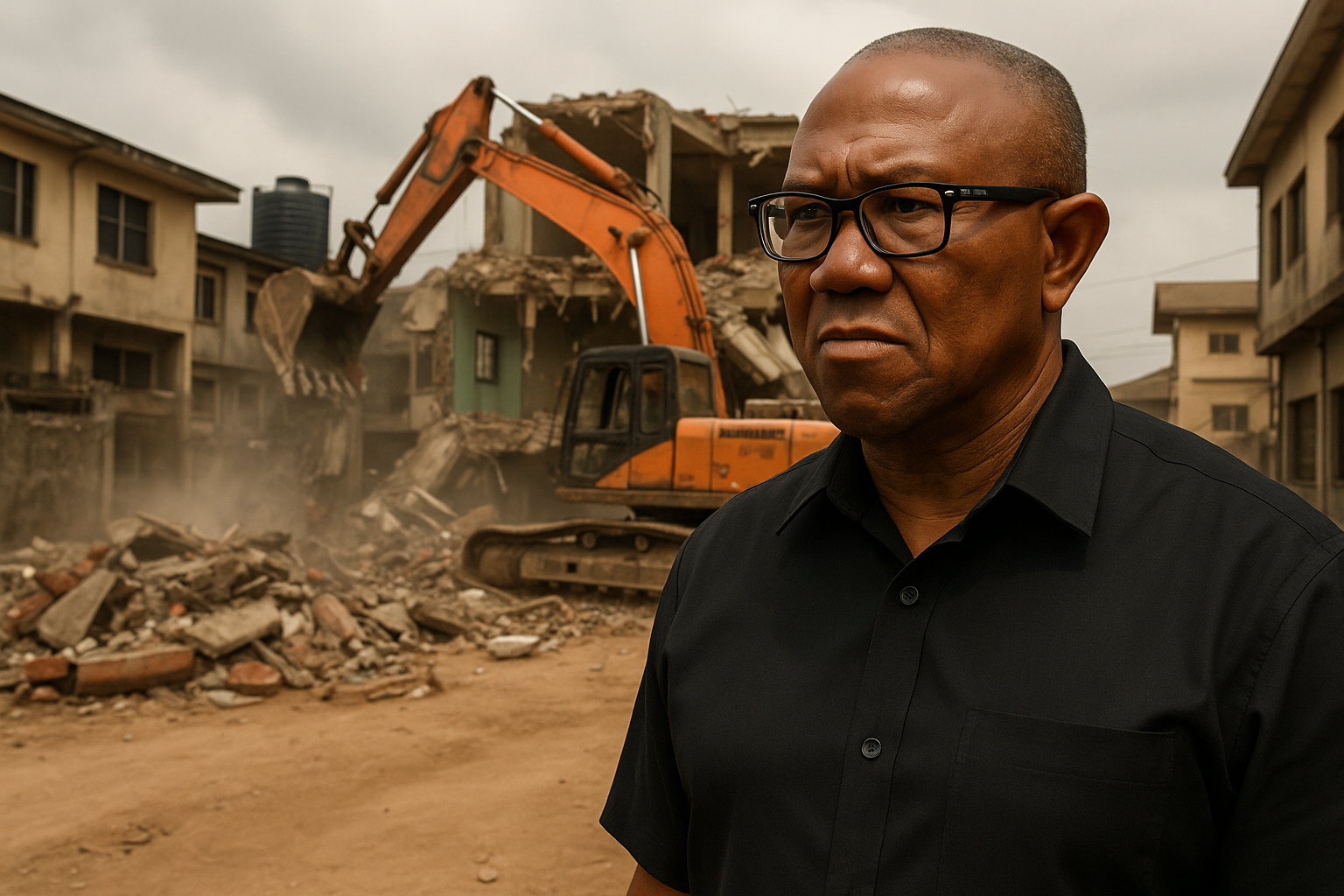
In a startling development, Peter Obi, the Labour Party’s presidential candidate in the 2023 elections, revealed that a property owned by his younger brother’s company was illegally demolished in Ikeja, Lagos. The structure, which had reportedly stood for over 15 years, was torn down without any documented legal authorization or official demolition notice.
According to Obi, the incident occurred early Tuesday when unknown individuals accompanied by security personnel arrived at the site and began demolishing the building.
Obi’s Immediate Response from Abuja
Upon receiving a distressed phone call from his brother, Obi flew in from Abuja to personally witness the situation. He was shocked to find excavators actively destroying the property, and no clear answers were provided by those on site.
- Clark Declares Support For Peter Obi
- https://www.thecheernews.com/nigerian-breweries-opens-entries-for-maltina-teacher-of-the-year-2025-competition/
“I arrived to see the demolition in full force. No explanation, no papers. Just coordinated lawlessness,” Obi stated in a post on his verified X (formerly Twitter) account.
Details of the Alleged Court Order
Lack of Named Defendants or Demolition Authorization
Obi expressed disbelief that the demolition was carried out based on a vague court judgment that neither identified his brother nor mentioned the property in question. He stressed that the judgment was allegedly addressed to ‘unknown squatters’ and did not include any demolition clause or enforcement directive.
Legal Ambiguities and Process Flaws
“This case is a textbook example of judicial misuse,” Obi noted. “No one was served, no names listed, yet bulldozers arrived to erase 15 years of property ownership.” Legal experts have since raised concerns about the credibility of enforcing such ambiguous judgments, which violate fundamental rights to property and due process.
Obi’s Personal Account and Witness Experience
Barred Access and Unanswered Questions
Obi recalled being denied entry to the site alongside his brother. Security agents refused to disclose who had ordered the operation, creating a tense and uncertain atmosphere.
“I waited there from 10 a.m. till 2 p.m., hoping someone from the responsible agency would show up. Nobody came. The entire process screamed of lawlessness,” Obi lamented.
Encounter with Supposed Enforcers
Eventually, two unidentified men arrived and suggested Obi accompany them to a police station. When asked for a valid demolition permit or written authority, they reportedly had none—further reinforcing concerns of a coordinated but undocumented operation.
Legal Implications of the Incident
Due Process Violation and Rule of Law Concerns
Legal analysts have called the case deeply troubling and emblematic of Nigeria’s growing erosion of the rule of law. Demolitions without clear court orders or verified ownership disputes are not only illegal but constitute a gross violation of constitutional rights.
Can a Judgment Be Enforced Without Proper Service?
Experts argue that no court ruling should be executed without proper identification of parties, service of legal documents, and notice of execution. The alleged lack of legal documentation in this case may form the basis of a strong lawsuit for redress.
Reactions from Legal and Civil Rights Experts
Commentary from Legal Analysts
Lawyers have described the demolition as a breach of Sections 43 and 44 of the Nigerian Constitution, which guarantee citizens’ rights to acquire and own property without fear of arbitrary seizure or destruction.
Broader Civil Rights Concerns in Nigeria
“This case highlights the vulnerability of citizens—even prominent ones—to impunity and abuse of power,” one analyst told a national daily. “If due process is denied to Peter Obi’s family, imagine what ordinary Nigerians face.”
Impact on Investor Confidence and Business Climate
Obi’s Warning on the Dangers of Impunity
Peter Obi linked the incident to the broader issue of investor hesitation in Nigeria. He shared that a potential investor recently backed out of a venture due to concerns about Nigeria’s reputation for legal instability and corruption.
Foreign Investor Withdrawals from Nigeria
Cases like this fuel the perception that Nigeria is hostile to property rights, discouraging both domestic and foreign investment. This translates to slower economic growth, reduced job creation, and lost development opportunities.
Government Silence and Accountability Gap
Absence of Official Statements or Responsibility
As of the time of writing, no Lagos State agency or national body has claimed responsibility for the demolition. This deafening silence has triggered a wave of online outrage and calls for transparency.
Call for Transparency from State Agencies
Citizens and civil society organizations are demanding a thorough investigation, complete with an explanation from the agencies involved and a halt to illegal demolitions across the country.
Obi’s Broader Reflection on National Governance
A Country Sliding into Lawlessness?
Obi described the incident as “coordinated lawlessness”, warning that such unchecked actions represent a slide into impunity and disregard for human and civil rights.
Vision for a New Nigeria
Reaffirming his commitment to national reform, Obi promised to continue pushing for a Nigeria where the rule of law prevails, and every citizen—regardless of status—is protected.
Social Media Reactions and Public Sentiment
Public Support and Outrage on X (Twitter)
Thousands of users expressed solidarity with Obi, trending hashtags such as #StopDemolitions and #RuleOfLawNow. Many described the event as symptomatic of larger governance failures.
Civil Society Calls for Investigation
Human rights groups have issued statements condemning the act and calling on the Lagos State Government to clarify its role, if any, in the demolition.
Frequently Asked Questions (FAQs)
1. What exactly did Peter Obi allege?
He alleged that his younger brother’s company property in Lagos was demolished without a proper court order or official documentation.
2. Was there a court judgment?
Obi claims the referenced judgment was vague, unnamed, and lacked any specific order for demolition or mention of his brother’s property.
3. Who ordered the demolition?
As of now, no agency or government official has claimed responsibility for the act.
4. What is Peter Obi planning to do?
He has vowed to pursue legal redress and raise national awareness about increasing lawlessness.
5. How does this affect Nigerians at large?
If demolitions can occur without notice or legal backing, all property owners are vulnerable to similar acts.
6. What are the legal concerns with this case?
It violates constitutional rights to property, due process, and judicial transparency.
Conclusion: Seeking Justice and Restoring Rule of Law
The alleged Peter Obi Lagos property demolition is not just about bricks and mortar—it’s about protecting the rule of law, defending civil liberties, and restoring investor confidence in Nigeria. If left unchecked, such acts threaten to unravel the legal fabric that holds society together.
Obi’s experience is a stark reminder that in Nigeria today, property rights are only as secure as the institutions that protect them. Until there’s accountability, transparency, and reform, every citizen remains at risk.
-

-

-

-