By DAYO ADESULU
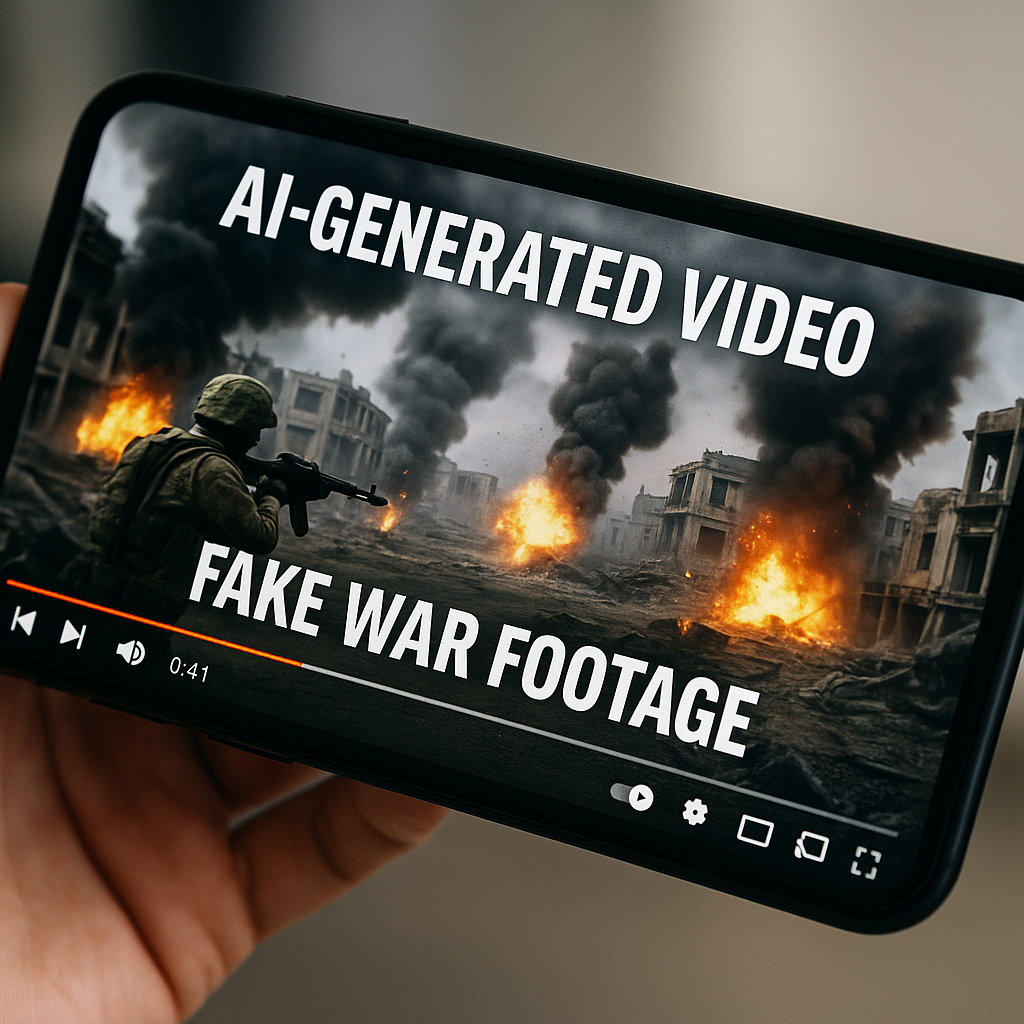
AI-generated war videos using tools like Veo 3 are fueling false narratives amid the Iran-Israel conflict, sparking global concerns about disinformation warfare.
⚠️ Digital Deception in Modern Warfare: AI Videos Flood Social Media
As tensions between Iran and Israel escalate, social media platforms have become a battleground—not just for opinions but for hyper-realistic, AI-generated war footage. A surge of viral videos claiming to depict real-time combat scenes is now under scrutiny, with experts revealing that many are fabricated using artificial intelligence.
🧠 How AI Tools Like Veo 3 Are Being Used to Create False War Narratives
Among the most alarming revelations is the role of Google’s latest video generation model, Veo 3, which allows users to create cinematic-quality videos with minimal input. Previously reserved for film studios, this technology is now widely accessible through platforms like YouTube Shorts and Canva, enabling anyone to craft synthetic visuals that mimic reality.
- Netanyahu’s Shocking Statement: Assassination of Iran’s Supreme Leader Could End War – Israel-Iran Conflict Intensifies
- https://www.thecheernews.com/west-africas-trade-crisis-why-intra-african-commerce-still-lags-below-10/
“This is no longer the domain of professional studios,” warns Yasmine El Laabi, fact-checking specialist at Agence France-Presse (AFP).
🔍 The Art and Science of Detecting Fake Videos
El Laabi emphasizes that identifying AI-generated content is becoming increasingly complex. It involves a multi-layered approach that combines:
| Tool | Function |
|---|---|
| Forensically | Extracts metadata from videos |
| InVID | Breaks videos into keyframes for visual analysis |
| Visual Cues | Examines shadows, lighting, blinking, and anomalies in hands, teeth, or background details |
“Verification now demands technical scrutiny and contextual verification with credible news sources or eyewitness footage,” she added.
🪖 Psychological Warfare: The New Battlefield of the Digital Age
The conflict’s visual front is being shaped not just by journalists or citizen footage but by propaganda disguised as fact. Jordanian data journalist Wael Abu Fares called this trend the “new face of disinformation.”
“The next battleground is about controlling the narrative, not just the facts,” Abu Fares told Hespress AR.
False videos can go viral in under an hour, amassing views before fact-checkers can intervene, making proactive countermeasures essential.
🚨 Experts Call for Proactive Verification and AI Regulation
Suggested Solutions Include:
- Automated AI detection systems to flag suspect videos at the point of upload
- Digital watermarks or signatures embedded in all AI-generated content
- Mandatory industry standards for transparency and traceability
A promising initiative gaining traction is Content Credentials, supported by Adobe and Google. This tool embeds metadata in the video’s source code, showing:
- Software used
- Date and location of creation
- Full edit history
Abu Fares stressed that widespread adoption could “transform the credibility landscape” but requires cross-industry cooperation.
🏢 Newsrooms Advised to Integrate Machine Learning for Video Verification
To fight AI-fueled misinformation, media outlets must equip themselves with AI-powered forensic tools capable of analyzing and flagging suspicious video content in real-time. Abu Fares advocates for:
- Deep learning models trained to detect visual anomalies
- Tracking engagement spikes on social media
- Cross-referencing content against verified databases
“Hybrid verification systems are the future,” he concluded. “They offer our best defense against synthetic disinformation.”
🌍 A Global Call to Action: United Effort Needed to Combat AI Deception
With AI tools evolving rapidly, experts argue that only a unified global infrastructure can defend against the weaponization of synthetic media.
“In this new era of warfare, the truth needs both a shield and a strategy,” said Abu Fares.
The urgency is clear: As deepfake and AI-generated videos become indistinguishable from reality, safeguarding truth in conflict zones must become a global priority.
📌 Key Takeaways: What You Need to Know
- AI-generated videos are being used to spread false narratives in the Iran-Israel conflict.
- Google’s Veo 3 and other tools enable realistic fake video creation.
- Experts call for metadata tagging, regulation, and proactive detection systems.
- Newsrooms and platforms must adapt rapidly to verify content before it goes viral.
📷 AI-Generated Images for Blog Visuals
Let’s now generate 4 relevant, blog-ready visuals:
- AI-generated video scene depicting fake warfare footage on a phone screen.
- Illustration of an analyst examining metadata and video keyframes on dual monitors.
- A newsroom equipped with machine-learning tools detecting synthetic content.
- Visual metaphor of disinformation vs. truth on a battlefield landscape.
-

-

-

-