By DAYO ADESULU
The Heated Debate on State Police
The push for state police creation in Nigeria has grown more intense. From persistent insecurity across regions to the call for decentralized authority, many argue that Nigeria’s unitary policing model is outdated. Still, others—including the Inspector General of Police—warn that the country isn’t politically or institutionally prepared for such a seismic shift.
So, is Nigeria ready for state policing? Let’s break it down.

Understanding Nigeria’s Current Police Structure
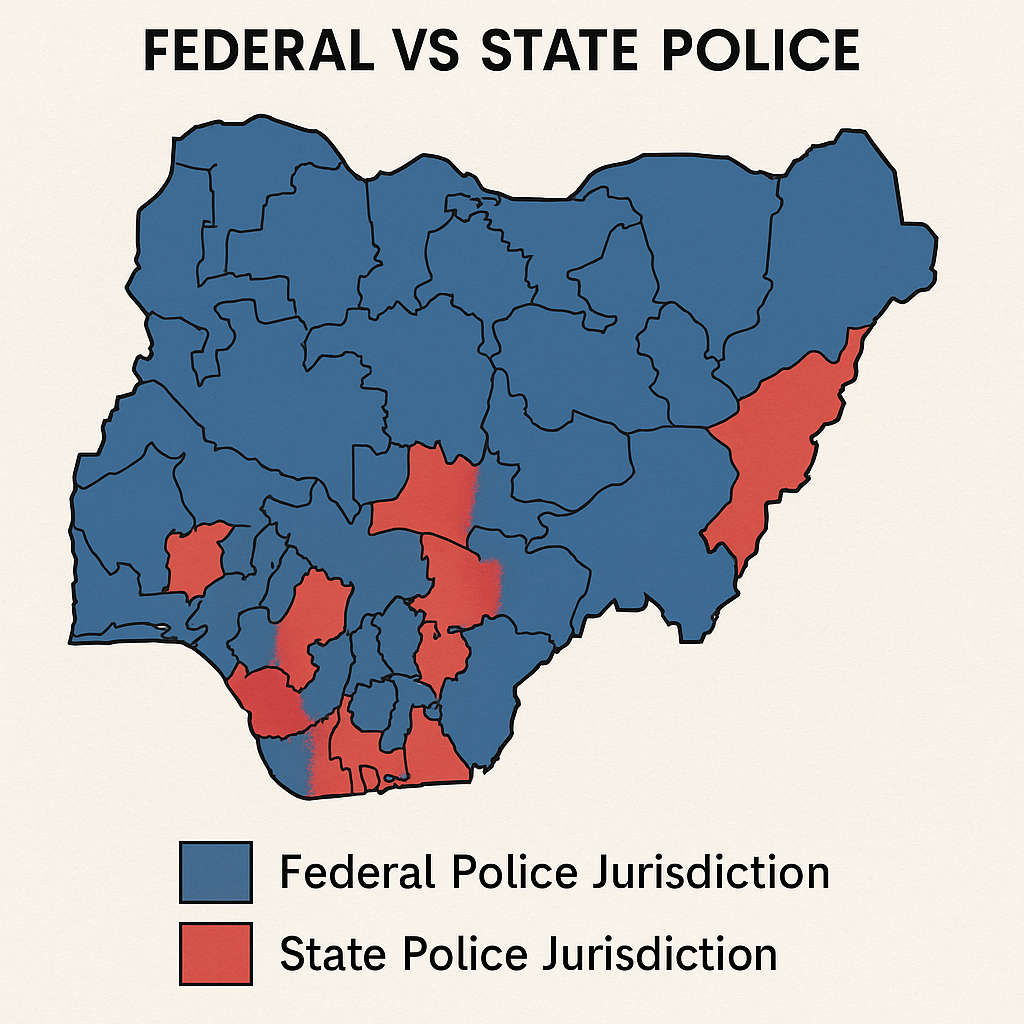
The Nigeria Police Force (NPF) is constitutionally empowered under:
- Section 214(1): Prohibits the creation of another police force outside the NPF.
- Section 215(1): Authorizes the President to appoint the Inspector General of Police.
This design centralizes authority and operational command—making Nigeria one of the few federations with a single, national police force.
- APC Chieftain Kicks Against State Police
- https://www.thecheernews.com/ogun-state-police-raise-alarm-over-rising-cases-of-missing-persons/
Why Some Say “No” to State Police
Inspector General Kayode Egbetokun has laid out several reasons:
- Inconsistencies in operational command during joint task forces.
- Lack of intelligence-sharing frameworks.
- Concerns over political readiness, especially in volatile regions.
- Constitutional silence on matters like border and community policing.
He argues that enhancing federal policing—with auxiliary state support—might be a safer, more structured route.


Why Others Say “Yes”
Debo Ogundoyin, Chairman of the Conference of Speakers, offers a passionate counterpoint. He insists that:
- States face unique local threats.
- The current system is overstretched and underfunded.
- State police would be faster, more culturally sensitive, and better rooted in community dynamics.
The Speakers’ Conference calls for a phased but firm transition to multi-layered policing.
A Nation with Regional Security Woes
| Region | Major Threats |
|---|---|
| North-East | Insurgency (Boko Haram, ISWAP) |
| North-West | Banditry, mass kidnappings |
| North-Central | Communal clashes, farmer-herder conflict |
| South-East | IPOB-linked attacks, police station raids |
| South-South | Oil bunkering, piracy, and armed militancy |
What a State Police Force Could Offer
- Rapid local response times
- Cultural fluency and language compatibility
- Community trust and cooperation
- Local intelligence advantages
It could also relieve pressure on federal forces, letting them concentrate on terrorism, cybercrime, and border protection.
Risks to Watch Out For
- Political misuse: Governors may weaponize police against opponents.
- Inconsistent standards: Wealthy states may outpace poorer ones.
- Jurisdiction clashes: Federal-state conflicts may delay crisis responses.
- Ethnic or regional bias in enforcement.
Strong laws, oversight boards, and training protocols are essential safeguards.
Learning from Other Countries
Countries like the USA, India, and Germany employ multi-tiered policing:
- Local forces manage communities.
- State forces patrol highways or handle investigations.
- National bodies manage terrorism, espionage, and interstate crime.
Nigeria can borrow best practices while respecting its unique ethnic and political sensitivities.
Where the People Stand
Surveys and social media sentiments suggest:
- Nigerians favor state policing with regulation.
- Many fear partisan abuse, especially during elections.
- Citizens support local recruitment and training, provided professionalism is ensured.
The Way Forward
- Begin with pilot states under federal supervision.
- Establish independent police commissions at the state level.
- Pass clear constitutional amendments.
- Launch joint training academies to align standards.
- Develop shared crime databases and inter-agency frameworks.
🧠 Frequently Asked Questions
Q1: Will state police replace the federal police?
No. It’s meant to complement, not replace.
Q2: What’s stopping state police now?
The 1999 Constitution, which prohibits any force besides the NPF.
Q3: How will abuse be prevented?
Through legal safeguards, oversight committees, and structured command models.
Q4: Can poor states afford it?
Only with federal matching funds or grants.
Q5: How soon can this happen?
With urgent constitutional reform, a phased rollout could begin in the next 3–5 years.
🎯 Final Thoughts
State police creation in Nigeria is no longer just an idea—it’s a national conversation. With rising insecurity, localized solutions may be inevitable. But they must be implemented responsibly, with transparency, federal support, and robust accountability. A hybrid system that preserves national unity while empowering local response might just be Nigeria’s best hope for security transformation.
-

-

-

-