By DAYO ADESULU
🏛️ President Tinubu Signs Four Tax Reform Bills Into Law: Boosting Nigeria’s Fiscal Future
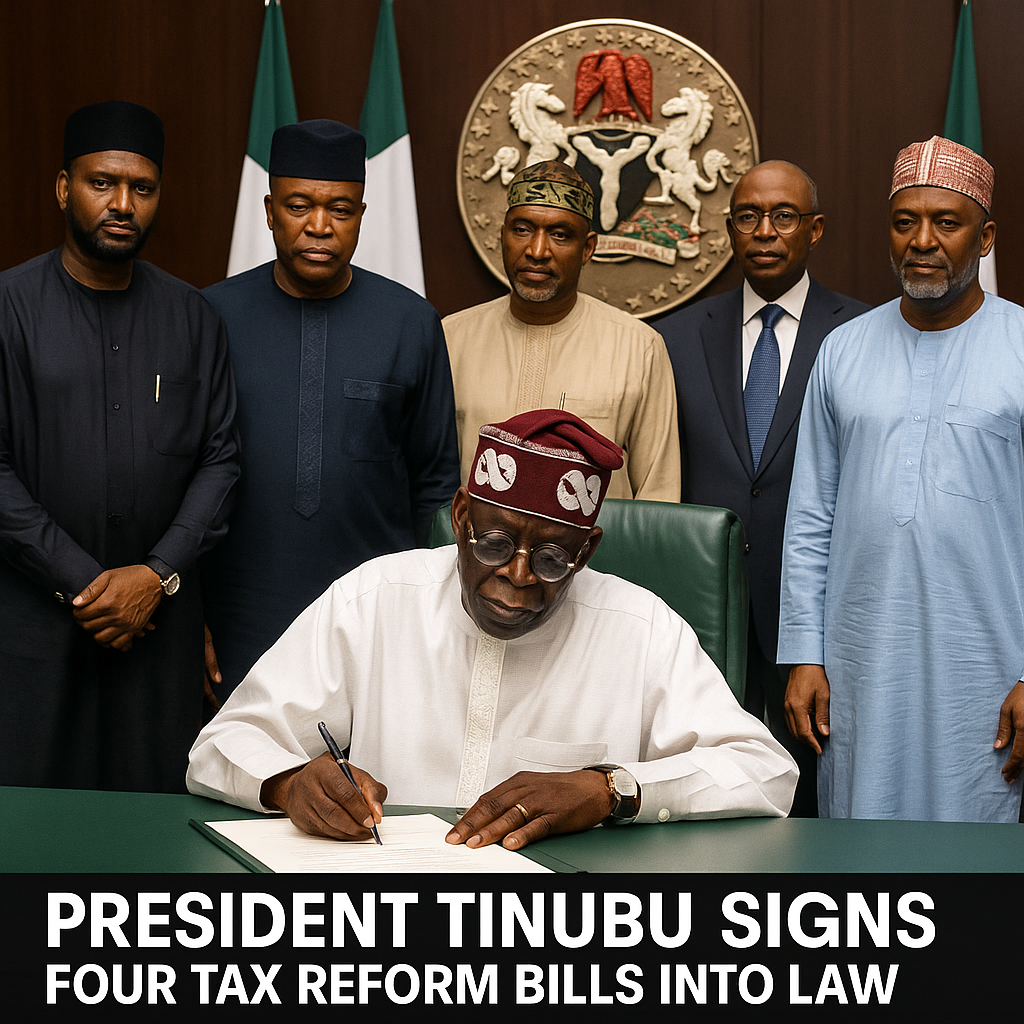
On Thursday, June 27, 2025, President Bola Ahmed Tinubu signed into law four groundbreaking tax reform bills designed to revamp Nigeria’s fiscal and revenue frameworks. These legislative reforms are poised to simplify tax administration, enhance national revenue collection, and stimulate local and foreign investments.
The announcement was made by Bayo Onanuga, Special Adviser to the President on Information and Strategy, in an official statement titled “President Tinubu signs four tax bills into law tomorrow.”
This move is a key step toward achieving the administration’s goal of fiscal transformation, transparency, and business environment improvement.
- NEITI Endorses 2024 Tax Reform Bill, Advocates for Modernized Tax System
- https://www.thecheernews.com/lawmakers-reject-vat-increase-to-15-in-new-tax-reform-bills/
📜 List of Tax Bills Signed by President Tinubu
The four tax bills signed into law are:
- Nigeria Tax Bill (Ease of Doing Business)
- Nigeria Tax Administration Bill
- Nigeria Revenue Service (Establishment) Bill
- Joint Revenue Board (Establishment) Bill
These bills were passed by the National Assembly following extensive consultations with stakeholders, tax experts, and the private sector.
🧾 1. Nigeria Tax Bill: Ease of Doing Business Reform
The Nigeria Tax Bill consolidates Nigeria’s previously fragmented tax laws into a harmonized statute, eliminating overlaps and confusion for businesses and taxpayers. It focuses on:
- Reducing the multiplicity of taxes
- Minimizing taxpayer compliance burdens
- Enhancing predictability in Nigeria’s fiscal landscape
By promoting a more streamlined tax process, this bill is expected to bolster ease of doing business and encourage formal sector growth.
⚖️ 2. Nigeria Tax Administration Bill: Unified Framework for Tax Collection
This bill establishes a uniform legal and operational framework for tax administration at all levels—federal, state, and local governments. Its key benefits include:
- Standardized procedures across all revenue agencies
- Increased transparency and fairness in tax operations
- Smoother taxpayer interaction with authorities
This is a critical foundation for implementing a centralized, tech-enabled tax system in Nigeria.
💼 3. Nigeria Revenue Service (Establishment) Bill: Creating a Stronger National Agency
Replacing the outdated Federal Inland Revenue Service (FIRS) Act, this bill sets up the new Nigeria Revenue Service (NRS) with broader responsibilities. Notable highlights:
- Autonomy and performance-driven operations
- Mandate to collect both tax and non-tax revenues
- Strong mechanisms for transparency and accountability
The creation of the NRS is expected to significantly increase government revenue and restore public trust in tax institutions.
🤝 4. Joint Revenue Board Bill: Driving Inter-Governmental Tax Cooperation
This law creates the Joint Revenue Board (JRB) to coordinate activities and foster cooperation between tax authorities at all levels. Its core features include:
- Establishing a Tax Appeal Tribunal
- Introducing the Office of the Tax Ombudsman
- Creating a governance structure for unified decision-making
These changes aim to resolve tax disputes quickly and protect taxpayer rights, while also promoting data sharing and system integration.
🧑⚖️ Who Attended the Signing Ceremony
The presidential assent ceremony, held at the Presidential Villa in Abuja, was attended by top-ranking government officials:
- Senate President Godswill Akpabio
- Speaker of the House Tajudeen Abbas
- Finance Minister Wale Edun
- Attorney General Lateef Fagbemi
- Governor Abdulrahman Abdulrazaq (Chairman, Nigeria Governors Forum)
- Governor Hope Uzodinma (Chairman, Progressives Governors Forum)
Their presence signifies widespread political and institutional support for the new tax agenda.
📈 Why These Tax Reforms Matter
The decision by President Tinubu to sign four tax reform bills into law reflects a commitment to restructuring Nigeria’s economy for long-term prosperity. According to Bayo Onanuga:
“These laws will transform tax administration, generate more revenue, improve the business climate, and attract more investments.”
Here’s how they make an impact:
| Reform Area | Benefits |
|---|---|
| Tax Simplification | Reduces confusion & duplication |
| Revenue Collection | Improves efficiency & non-oil revenue intake |
| Ease of Doing Business | Encourages startups and SMEs |
| Legal Oversight | Establishes tribunals & ombudsman for tax fairness |
📌 FAQs – President Tinubu Signs Four Tax Reform Bills Into Law
1. What are the four tax bills President Tinubu signed into law?
The Nigeria Tax Bill, Nigeria Tax Administration Bill, Nigeria Revenue Service (Establishment) Bill, and Joint Revenue Board (Establishment) Bill.
2. Why are these tax reform bills important?
They aim to consolidate tax laws, improve administration, boost revenue, and enhance Nigeria’s investment climate.
3. What is the Nigeria Revenue Service (NRS)?
A new, autonomous agency replacing FIRS, responsible for tax and non-tax revenue collection with improved efficiency.
4. Will this affect small businesses?
Yes, positively. The laws simplify tax processes and reduce compliance burdens for SMEs.
5. Who witnessed the signing ceremony?
Top federal legislators, ministers, and state governors including Senate President Akpabio and Speaker Abbas.
6. How will this impact foreign investment?
It creates a predictable, transparent tax environment, which encourages both domestic and international investors.
🏁 Conclusion: A Bold Step Toward Economic Reform
The fact that President Tinubu signs four tax reform bills into law underscores a national shift toward modern governance, efficient taxation, and economic resilience. These reforms are not only expected to increase federal revenue but also attract sustainable investment while protecting taxpayer rights.
As the new tax laws take effect, all eyes are on the implementation phase—Nigeria’s journey toward a fairer, simpler, and more productive tax system begins now.
-

-

-

-