YABATECH Governing Council Chairman Urges Tinubu to Make Technical Education Engine of Nigeria’s Economic Transformation

Prof. Funso Isolaowa Afolabi says Nigeria must move beyond certificate-driven education and produce graduates capable of solving national problems, creating jobs and driving technological innovation.
By DAYO ADESULU
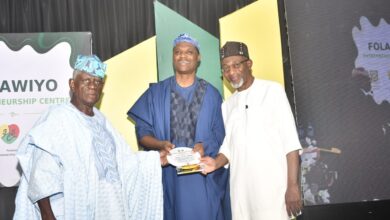
The Chairman of the Governing Council of Yaba College of Technology (YABATECH), Prof. Funso Isolaowa Afolabi, has called on the Federal Government to place technical and vocational education at the centre of Nigeria’s economic transformation, insisting that the country needs graduates who can turn knowledge into practical solutions, create employment and drive technological innovation.
Afolabi made the call on Thursday, November 19, 2026, while delivering his address at the institution’s 39th Convocation Ceremony in Lagos.
He argued that Nigeria could not achieve meaningful economic development without building a skilled workforce capable of responding to the demands of a rapidly changing global economy.
According to him, the growing influence of artificial intelligence, automation, data analytics, digital technology and scientific innovation has made it necessary for higher institutions to rethink their traditional approach to teaching and learning.
He maintained that technical and vocational education must go beyond the award of certificates to equip students with practical competencies, critical thinking abilities and entrepreneurial skills.
The Governing Council chairman’s remarks come at a critical period when Nigeria continues to grapple with unemployment, economic pressures, skills shortages and the need to diversify its economy through technology, industrialisation and innovation.
Tinubu’s Renewed Hope Agenda Must Prioritise Technical Education
Afolabi specifically linked the future of technical and vocational education in Nigeria to President Bola Ahmed Tinubu’s Renewed Hope Agenda.
He said the President’s development vision should encourage researchers, students and technical institutions to develop practical solutions to the country’s economic and technological challenges.
The YABATECH Governing Council chairman identified the contributions of three historical figures whose philosophies, he argued, could provide useful foundations for modern technical and vocational education.
They include Frank Parsons, Charles A. Prosser and Herbert Macaulay.
He explained that Parsons pioneered vocational guidance by emphasising the importance of matching individuals’ abilities and interests with suitable careers.
Similarly, Prosser’s contributions focused on vocational training systems that reflect actual workplace conditions and prepare students for the demands of industry.
Afolabi said these principles remain relevant to Nigeria’s education system, particularly as institutions seek to close the gap between classroom learning and industry requirements.
He urged younger researchers and students to revisit these ideas and apply modern scientific tools to improve curriculum development, research and practical training.
According to him, integrating artificial intelligence, data science, geoinformatics, geomatics and other emerging technologies into technical education could help position Nigerian graduates as contributors to national development.
YABATECH Transformation: Chairman Reflects on Institutional Upgrade
Afolabi also highlighted the institutional transformation of Yaba College of Technology, describing its transition towards university status as a defining moment in its history.
He recalled the institutional change process and acknowledged the contributions of the Federal Government, President Bola Ahmed Tinubu, the National Assembly, the Federal Ministry of Education and other stakeholders.
He described the development as a collective achievement rather than the accomplishment of any individual.
The chairman expressed appreciation to the President, members of the National Assembly, Education Minister Dr. Maruf Tunji Alausa, Minister of State for Education Prof. Suwaiba Sa’idu Ahmad, the Governing Council, management, staff unions, students and other stakeholders.
He also acknowledged the prayers and goodwill messages received from religious leaders and Nigerians at home and abroad.
Afolabi said the institution must now translate its changing identity into measurable improvements in academic excellence, research, technological innovation, vocational development, governance and international relevance.
He stressed that institutional transformation would require sustained cooperation among the Governing Council, management, academic staff, students, alumni, government and private-sector organisations.
‘Your Certificates Must Not Be the Final Evidence of Your Intellectual Capacity’
Delivering a direct message to the graduating students, Afolabi challenged them not to regard their academic certificates as the ultimate measure of their achievements.
He said the ability to think critically, innovate, adapt and solve problems would determine their relevance in the emerging knowledge economy.
He encouraged the graduands to approach life with the principles of algorithms and heuristics, explaining that they must learn to define objectives, identify challenges, analyse available information, develop solutions, evaluate results and continuously improve.
In a particularly strong message, he said:
“Do not allow your certificates to become the final evidence of your intellectual capacity. Let them become instruments for further discovery, enterprise development and service to humanity.”
The chairman further urged graduates to move beyond the traditional expectation of securing paid employment.
He said Nigeria needed young people who could create economic opportunities, develop practical solutions to societal challenges and convert acquired knowledge into measurable social and economic value.
He also emphasised the importance of integrity, innovation and professional excellence, urging the graduands to allow these principles to guide their careers.
Calls for Stronger Partnerships Between Universities and Industry
Beyond the graduating students, Afolabi called on alumni, private-sector organisations and development partners to deepen their contributions to the institution’s growth.
He identified research collaboration, scholarships, internships, technology transfer and enterprise development as important areas where stronger partnerships could produce meaningful results.
According to him, the future of the institution should not rest exclusively on the government or management.
Rather, all stakeholders must contribute to building an institution capable of producing skilled graduates and supporting Nigeria’s technological ambitions.
He commended the Acting Vice-Chancellor, Engr. Dr. Ibraheem Adedotun Abdul, the management team, Academic Board and academic and non-academic staff for their contributions to the institution’s development.
He also reaffirmed the Governing Council’s responsibility to provide strategic direction, ensure accountability, strengthen institutional oversight and create an enabling environment for growth.
Why Technical and Vocational Education Matters to Nigeria
Nigeria’s economic future increasingly depends on its ability to develop people with practical and technological skills.
While conventional academic qualifications remain important, employers and industries also require graduates who can operate machinery, develop software, manage digital systems, conduct applied research and solve real-world problems.
Technical and vocational institutions therefore occupy an important position in addressing unemployment, strengthening local industries and reducing dependence on imported expertise.
Afolabi’s position highlights the need for Nigeria to connect education more directly with industrial development.
For instance, stronger collaboration between technical institutions and manufacturing companies could help students gain workplace experience before graduation. Likewise, investment in laboratories, research facilities and modern equipment could encourage innovation and support local production.
Artificial intelligence and data science also present opportunities to improve research, industrial processes and public services.
However, achieving these objectives requires more than policy declarations. It demands sustained funding, qualified instructors, modern infrastructure, industry partnerships and curriculum reforms that respond to changing economic realities.
A New Responsibility for YABATECH
As the institution moves towards its new identity as the Federal University of Technology and Vocational Studies, Afolabi said the priority must be to ensure that the transition produces tangible results.
He identified academic distinction, technological innovation, vocational excellence, research development, effective governance and global relevance as critical areas for the institution’s future.
He urged stakeholders to work together to build an institution that would contribute meaningfully to Nigeria’s socio-economic development.
Concluding his address, the Governing Council chairman congratulated the graduating students, their parents and guardians, staff and other stakeholders.
He reminded the graduates that the real value of their education would ultimately depend on what they contributed to society.
“The future is yours to redefine, the challenges are yours to scientifically solve, and the opportunities are yours to recreate,” he declared.
His message underscored a broader national challenge: Nigeria must move from an education system that places overwhelming emphasis on certificates to one that produces competent people capable of building industries, creating businesses and solving national problems.
For the graduating students, the next phase of their lives will test not just what they have learnt, but how effectively they can apply that knowledge.
SEO Details
SEO Title: YABATECH Chairman Urges Tinubu to Prioritise Technical Education
Focus Keyphrase: Technical Education in Nigeria
Meta Description: YABATECH Governing Council Chairman, Prof. Funso Afolabi, urges Tinubu to prioritise technical education, innovation and skills development for Nigeria’s economic growth.
URL Slug: yabatech-chairman-tinubu-technical-education-nigeria
Keywords: YABATECH, Prof Funso Isolaowa Afolabi, Technical Education in Nigeria, Tinubu Renewed Hope Agenda, vocational education, 39th Convocation, Federal University of Technology and Vocational Studies, Nigerian universities, artificial intelligence, skills development.
Frequently Asked Questions
1. Who is the Chairman of YABATECH Governing Council?
Prof. Funso Isolaowa Afolabi is the Chairman of the Governing Council of Yaba College of Technology.
2. What did the YABATECH chairman ask President Tinubu to prioritise?
He called for greater emphasis on technical and vocational education as a foundation for Nigeria’s economic transformation.
3. What message did he give graduating students?
He urged them to look beyond certificates, embrace innovation, solve problems, create employment opportunities and maintain integrity.
4. What role should artificial intelligence play in technical education?
He advocated integrating artificial intelligence, data science and other emerging technologies into research, curriculum development and practical training.
5. What is the future direction of YABATECH?
He said the institution should pursue academic excellence, technological innovation, vocational development, research, effective governance and global relevance.