The Rise of AI Agents: How Autonomous AI Is Changing Work and Business

By DAYO ADESULU
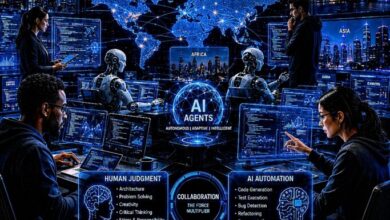
Artificial intelligence has moved beyond simply answering questions or generating text. A new wave of technology known as AI agents is emerging, capable of planning, reasoning, making decisions, and completing complex tasks with minimal human supervision. From managing business workflows to conducting research and automating customer support, AI agents are reshaping how organizations operate across industries.
Technology leaders including OpenAI, Google, Anthropic, Microsoft, Salesforce, Amazon, and NVIDIA are investing heavily in AI agent technologies, signaling what many analysts believe could become the next major phase of artificial intelligence.
For businesses, governments, and professionals, understanding AI agents is no longer optional—it is becoming essential.
What Are AI Agents?
Unlike traditional AI chatbots that respond to prompts one question at a time, AI agents can perform multi-step tasks independently.
An AI agent can:
- Analyze information.
- Create a plan.
- Execute multiple actions.
- Monitor results.
- Adjust its approach based on new information.
For example, instead of asking an AI to “write an email,” an AI agent could:
- Read incoming emails.
- Prioritize urgent messages.
- Draft responses.
- Schedule meetings.
- Generate reports.
- Notify team members.
The goal is to complete an entire workflow rather than a single request.
How AI Agents Work
Large Language Models
Most AI agents are powered by advanced large language models (LLMs), which allow them to understand natural language and generate human-like responses.
Planning and Reasoning
Modern AI agents can break large tasks into smaller steps before carrying them out.
Instead of acting immediately, they evaluate different options and choose the most effective path.
Tool Integration
AI agents can connect with:
- Email platforms
- Customer relationship management (CRM) systems
- Cloud storage
- Databases
- Calendars
- Productivity software
- Coding environments
This integration enables them to perform real business tasks rather than simply providing suggestions.
Industries Being Transformed
Healthcare
Hospitals are exploring AI agents to:
- Schedule appointments
- Analyze medical records
- Support clinical documentation
- Improve patient communication
While human oversight remains essential, these systems can reduce administrative workloads.
Finance
Banks are deploying AI agents for:
- Fraud detection
- Customer support
- Compliance monitoring
- Risk analysis
- Financial reporting
The technology helps institutions respond faster while improving operational efficiency.
Journalism
News organizations are beginning to experiment with AI agents that:
- Monitor breaking news
- Summarize official documents
- Assist with research
- Verify public records
- Generate story drafts for editorial review
Editorial judgment and fact-checking continue to require human journalists.
Manufacturing
Factories use AI agents to:
- Predict equipment failures
- Optimize production schedules
- Improve quality control
- Reduce downtime
Customer Service
AI agents now provide continuous support by:
- Answering customer questions
- Tracking orders
- Processing refunds
- Escalating complex cases to human representatives
Recent Developments
The AI industry has accelerated investment in autonomous systems over the past year.
Technology companies have introduced increasingly capable agent platforms designed to automate software development, office productivity, customer support, and enterprise workflows. Businesses are also integrating AI agents into workplace software to reduce repetitive tasks and improve decision-making.
Industry analysts expect enterprise adoption to continue expanding as organizations seek productivity gains while maintaining appropriate human oversight.
Benefits of AI Agents
Increased Productivity
AI agents can perform repetitive work around the clock, allowing employees to focus on strategic responsibilities.
Faster Decision-Making
By processing vast amounts of information quickly, AI agents help organizations respond more rapidly to changing conditions.
Lower Operating Costs
Automation can reduce administrative expenses while improving efficiency.
Improved Customer Experience
Customers receive quicker responses and more personalized interactions.
Better Business Intelligence
AI agents can analyze large datasets and identify trends that might otherwise go unnoticed.
Risks and Challenges
Despite their potential, AI agents present important challenges.
Data Privacy
Organizations must ensure sensitive information remains secure.
Hallucinations
AI systems can occasionally generate incorrect or misleading information, making verification essential.
Security Threats
Poorly configured AI agents could expose organizations to cyber risks if granted excessive access.
Workforce Transition
Some routine jobs may change significantly, increasing demand for workers with AI-related skills.
Ethical Concerns
Businesses must establish clear governance to ensure AI decisions remain transparent, fair, and accountable.
Expert Perspectives
Technology executives increasingly describe AI agents as the next evolution of workplace software. Rather than replacing human expertise, many experts envision AI agents acting as digital collaborators that handle repetitive processes while people focus on creativity, leadership, and complex decision-making.
Researchers also emphasize that successful deployment depends on strong governance, reliable data, and continuous human oversight.
Future Outlook
Over the next decade, AI agents are expected to become standard features in enterprise software, education, healthcare, financial services, and government operations.
Advances in reasoning, memory, multimodal capabilities, and tool integration are likely to make these systems more capable of handling sophisticated tasks. However, regulatory frameworks and ethical standards will play an increasingly important role in shaping their adoption.
Organizations that invest in AI literacy and responsible implementation may be better positioned to benefit from this technological shift.
Why This Matters
AI agents represent a significant evolution in artificial intelligence. They have the potential to transform productivity, streamline operations, and redefine how people work. For businesses, the challenge will be balancing innovation with responsible governance, ensuring that AI complements human expertise rather than replacing it indiscriminately.
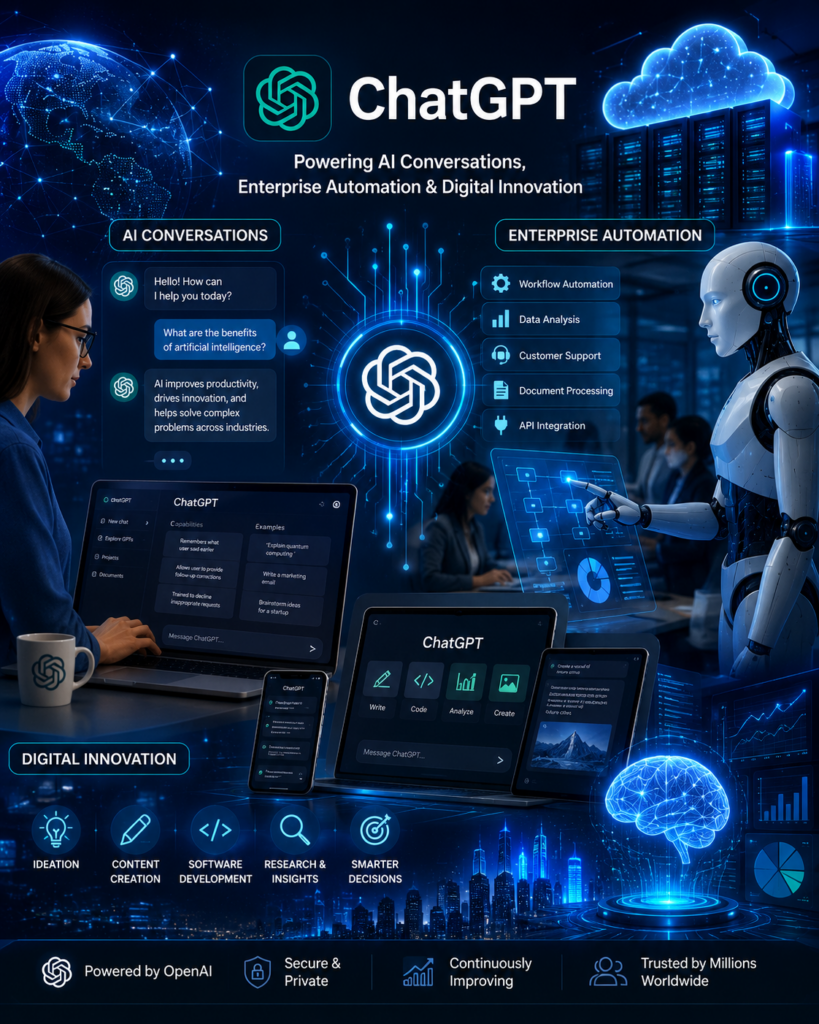
ChatGPT Explained: Features, Benefits, Risks, Future Trends
Frequently Asked Questions (FAQs)
What is an AI agent?
An AI agent is an artificial intelligence system capable of planning, making decisions, and completing multi-step tasks with limited human intervention.
How is an AI agent different from ChatGPT?
Traditional chatbots primarily respond to prompts, while AI agents can independently execute workflows using connected tools and applications.
Will AI agents replace human workers?
Most experts believe AI agents will automate repetitive tasks while creating demand for new skills in AI management, oversight, and strategic decision-making.
Which industries will benefit the most?
Healthcare, finance, manufacturing, education, retail, media, logistics, and customer service are among the sectors expected to see significant benefits.
Are AI agents safe?
They can be highly useful when implemented with proper security controls, data governance, and human oversight. Organizations should establish clear policies to manage risks.
Conclusion
AI agents are poised to become one of the most influential technological developments of this decade. Their ability to automate complex workflows, support decision-making, and enhance productivity is attracting significant investment from leading technology companies and enterprises worldwide. While challenges around security, ethics, and workforce adaptation remain, organizations that embrace responsible AI adoption are likely to gain a competitive advantage in the rapidly evolving digital economy.
https://www.thecheernews.com/ai-startups-in-nigeria-2025-how-artificial-intelligence-empowers-growth
Hashtags
#AIAgents #ArtificialIntelligence #GenerativeAI #FutureOfWork #MachineLearning #Automation #DigitalTransformation #EnterpriseAI #Technology #TheCheerNews