By DAYO ADESULU
Introduction
Artificial intelligence (AI) is no longer a futuristic concept confined to research laboratories. It is rapidly becoming an indispensable part of modern healthcare, helping doctors diagnose diseases earlier, assisting surgeons during complex procedures, accelerating drug discovery, and improving patient care. From hospitals in the United States and Europe to healthcare systems across Asia and Africa, AI is reshaping how medicine is practiced.
The global AI healthcare market continues to grow rapidly as governments, hospitals, pharmaceutical companies, and technology firms invest billions of dollars in intelligent systems designed to improve outcomes while reducing costs. Although AI cannot replace healthcare professionals, it is proving to be a powerful partner that enhances medical expertise and streamlines healthcare delivery.
As populations age and healthcare demands increase, artificial intelligence is emerging as one of the most transformative technologies of the 21st century.
How Artificial Intelligence Is Changing Healthcare
Healthcare generates enormous amounts of data every day, including medical records, laboratory results, X-rays, CT scans, MRI images, prescriptions, and patient histories. AI excels at analyzing these vast datasets quickly, identifying patterns that may be difficult for humans to detect.
Modern AI systems help healthcare providers:
- Detect diseases earlier
- Improve diagnostic accuracy
- Personalize treatment plans
- Monitor patients remotely
- Predict disease outbreaks
- Reduce administrative burdens
- Accelerate medical research
Rather than replacing doctors, AI is helping them make better-informed clinical decisions.
AI-Powered Medical Diagnosis
Earlier Detection Saves Lives
One of AI’s greatest strengths lies in disease detection.
Advanced AI models can analyze medical images such as:
- X-rays
- Mammograms
- CT scans
- MRI scans
- Retinal images
- Skin lesion photographs
In many cases, AI helps identify abnormalities that might otherwise be overlooked, enabling earlier intervention and better patient outcomes.
Cancer Detection
Artificial intelligence is improving the early detection of several forms of cancer, including breast, lung, prostate, and skin cancer. By analyzing medical images and pathology slides, AI can help radiologists identify suspicious findings more quickly and consistently.
Cardiovascular Disease
AI systems can analyze electrocardiograms (ECGs), medical histories, and imaging data to identify patients at higher risk of heart disease, stroke, or cardiac arrest, allowing preventive treatment before serious complications occur.
AI in Drug Discovery
Developing a new medicine traditionally takes many years and requires significant investment.
Artificial intelligence is helping pharmaceutical researchers by:
- Identifying promising drug candidates
- Predicting molecular interactions
- Simulating clinical outcomes
- Reducing laboratory testing time
- Improving clinical trial design
By accelerating these processes, AI has the potential to bring life-saving treatments to patients more quickly.
Personalized Medicine
Every patient is different.
AI enables healthcare providers to develop personalized treatment plans based on factors such as:
- Genetics
- Medical history
- Lifestyle
- Current medications
- Laboratory results
- Disease progression
This approach allows physicians to tailor therapies that are more effective while reducing unnecessary treatments and side effects.
AI-Assisted Surgery
Smarter Operating Rooms
Robotic-assisted surgical systems supported by AI are helping surgeons perform delicate procedures with greater precision.
These systems can:
- Improve visualization
- Reduce hand tremors
- Enhance surgical planning
- Increase precision
- Shorten recovery times
Importantly, surgeons remain in control throughout the procedure, using AI as an advanced support tool rather than an autonomous replacement.
Virtual Health Assistants
Hospitals increasingly use AI-powered virtual assistants to:
- Schedule appointments
- Answer patient questions
- Send medication reminders
- Monitor chronic conditions
- Provide follow-up care instructions
These tools improve patient engagement while reducing administrative workloads for healthcare staff.
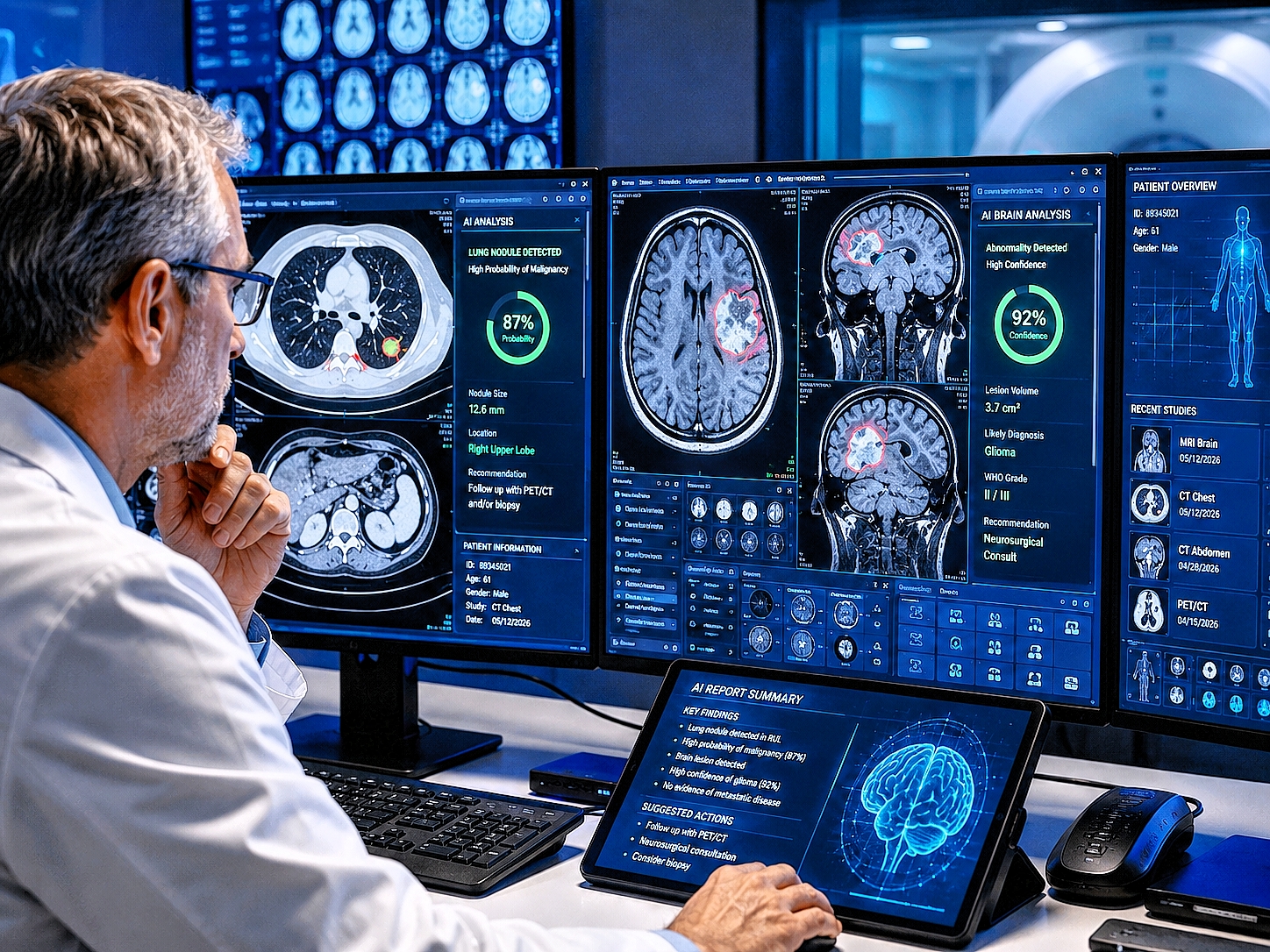
AI and Medical Imaging
Radiology has become one of AI’s fastest-growing applications.
AI can rapidly analyze thousands of medical images, helping radiologists prioritize urgent cases and detect subtle abnormalities. This capability is especially valuable in regions facing shortages of specialist physicians.
Remote Patient Monitoring
Wearable devices and connected health technologies generate continuous streams of health data.
Artificial intelligence can monitor:
- Heart rate
- Blood pressure
- Blood oxygen levels
- Blood glucose
- Sleep quality
- Physical activity
When unusual patterns are detected, healthcare providers can intervene before a patient’s condition worsens.
AI in Public Health
Artificial intelligence also supports governments and public health agencies by:
- Predicting disease outbreaks
- Tracking infectious diseases
- Monitoring vaccination campaigns
- Allocating healthcare resources
- Identifying high-risk populations
These capabilities strengthen healthcare preparedness during public health emergencies.
Recent Developments
Healthcare organizations worldwide are increasingly integrating AI into clinical workflows. Hospitals are deploying AI-assisted imaging tools, pharmaceutical companies are expanding AI-driven drug discovery, and researchers are exploring generative AI to support medical documentation and clinical decision-making.
Technology companies continue to introduce more advanced healthcare AI solutions, while regulators in many countries are developing frameworks to ensure these systems meet standards for safety, effectiveness, transparency, and patient privacy.
Benefits of Artificial Intelligence in Healthcare
Improved Diagnostic Accuracy
AI helps physicians detect diseases earlier and with greater consistency.
Faster Clinical Decisions
Healthcare professionals can access insights within seconds, improving emergency care and treatment planning.
Lower Healthcare Costs
Automation reduces administrative burdens and improves operational efficiency.
Better Patient Outcomes
Earlier diagnosis and personalized treatment can lead to improved recovery rates.
Expanded Access
AI-powered telemedicine and remote monitoring improve healthcare access for patients in underserved and rural communities.
Risks and Challenges
Despite its promise, AI adoption in healthcare presents several challenges.
Data Privacy
Protecting sensitive patient information remains a top priority.
Bias in AI Models
AI systems trained on limited or unrepresentative data may produce unequal outcomes across different populations.
Regulatory Compliance
Healthcare AI must comply with strict medical standards before clinical deployment.
Human Oversight
AI should support—not replace—the judgment and expertise of qualified healthcare professionals.
Cybersecurity
Healthcare organizations must secure AI systems against cyber threats that could compromise patient data or disrupt clinical services.
Expert Perspectives
Medical experts generally view AI as a transformative tool that complements healthcare professionals rather than replacing them. Researchers believe the greatest value of AI lies in augmenting human expertise, enabling faster diagnoses, improving efficiency, and supporting more personalized care.
Experts also emphasize that successful implementation depends on responsible governance, high-quality data, clinical validation, and maintaining trust between patients and healthcare providers.
Future Outlook
The future of AI in healthcare is expected to include more advanced predictive diagnostics, smarter wearable devices, personalized therapies, AI-assisted robotic surgery, and improved management of chronic diseases.
As technology continues to evolve, collaboration between healthcare professionals, technology companies, regulators, and researchers will be essential to ensure AI is deployed safely, ethically, and equitably.
Why This Matters
Artificial intelligence has the potential to improve healthcare outcomes for millions of people worldwide by enabling earlier diagnosis, more personalized treatments, faster medical research, and greater access to quality care. While challenges related to ethics, privacy, and regulation remain, responsible adoption of AI could help address some of the world’s most pressing healthcare challenges.
Frequently Asked Questions (FAQs)
What is AI in healthcare?
AI in healthcare refers to the use of artificial intelligence technologies to assist with diagnosis, treatment, patient monitoring, medical research, and healthcare administration.
Can AI replace doctors?
No. AI is designed to support healthcare professionals by providing data-driven insights and automating routine tasks. Clinical decisions remain the responsibility of qualified medical practitioners.
How does AI improve patient care?
AI improves patient care through earlier disease detection, personalized treatment recommendations, remote monitoring, and more efficient healthcare delivery.
Is AI safe to use in hospitals?
AI can be safe when it is clinically validated, properly regulated, and used under the supervision of trained healthcare professionals.
Which medical fields benefit most from AI?
Radiology, oncology, cardiology, pathology, surgery, drug discovery, and telemedicine are among the areas experiencing significant benefits from AI technologies.
Conclusion
Artificial intelligence is redefining modern healthcare by enhancing diagnostic accuracy, accelerating medical research, improving patient care, and supporting healthcare professionals in ways that were unimaginable just a decade ago. Although AI is not a substitute for human expertise, its ability to process complex medical data and assist in clinical decision-making makes it one of the most powerful tools in modern medicine.
As healthcare systems worldwide continue to embrace AI responsibly, the technology has the potential to make healthcare more efficient, accessible, and personalized—ultimately helping save lives and improve health outcomes for future generations.
#ArtificialIntelligence #Healthcare #HealthTech #MedicalAI #DigitalHealth #AIInnovation #FutureOfHealthcare #Telemedicine #MedicalTechnology #TheCheerNews